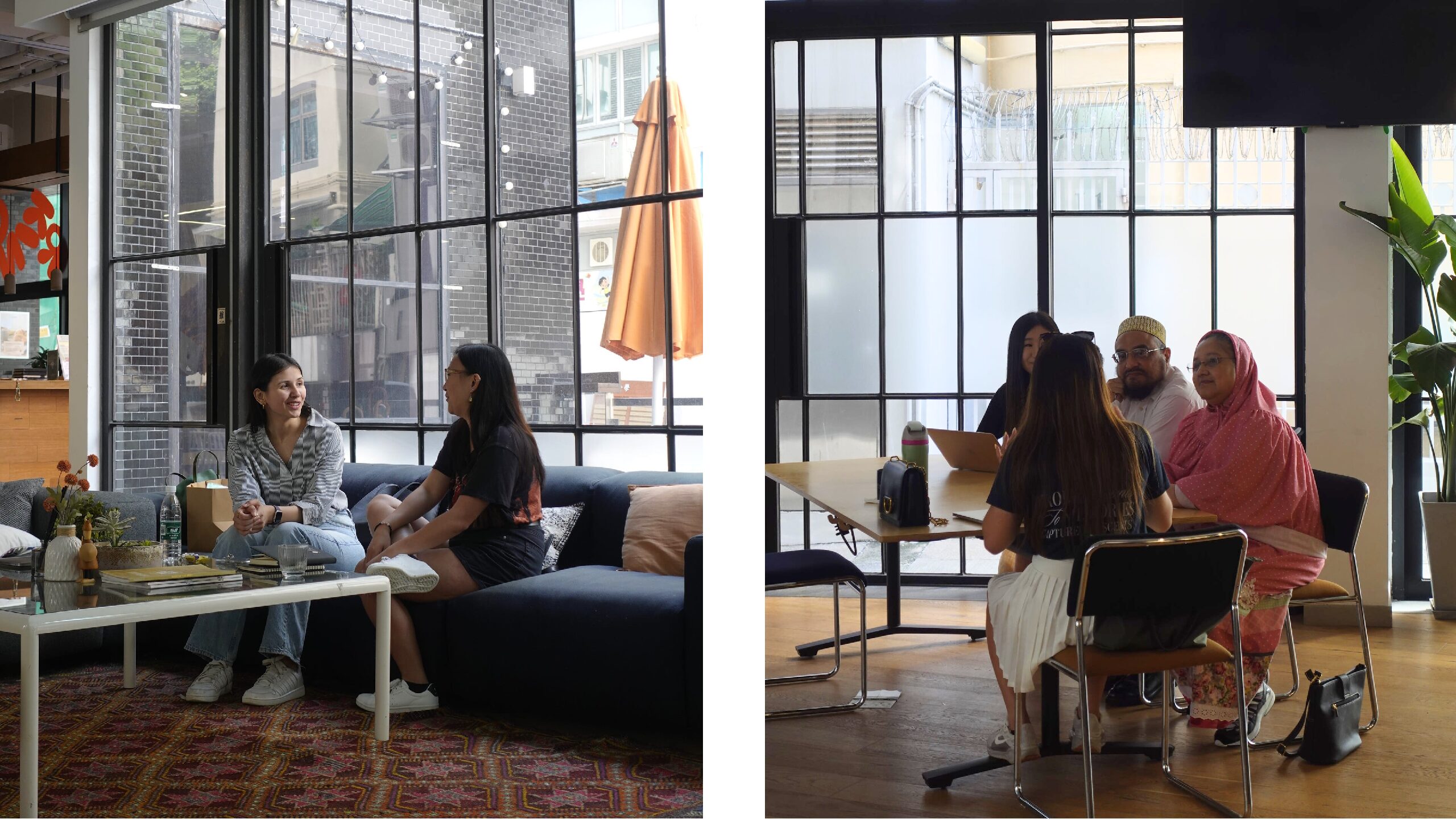
A clear goal, vision, and mission are essential to business success. This is why, on 27 September, in the second workshop of our 2025-26 Mentorship Program for Ethnically Diverse Entrepreneurs, we brought together the current cohort of mentee entrepreneurs and their mentors at the Hive Poho, our venue partner, for a deep dive into goal-setting.
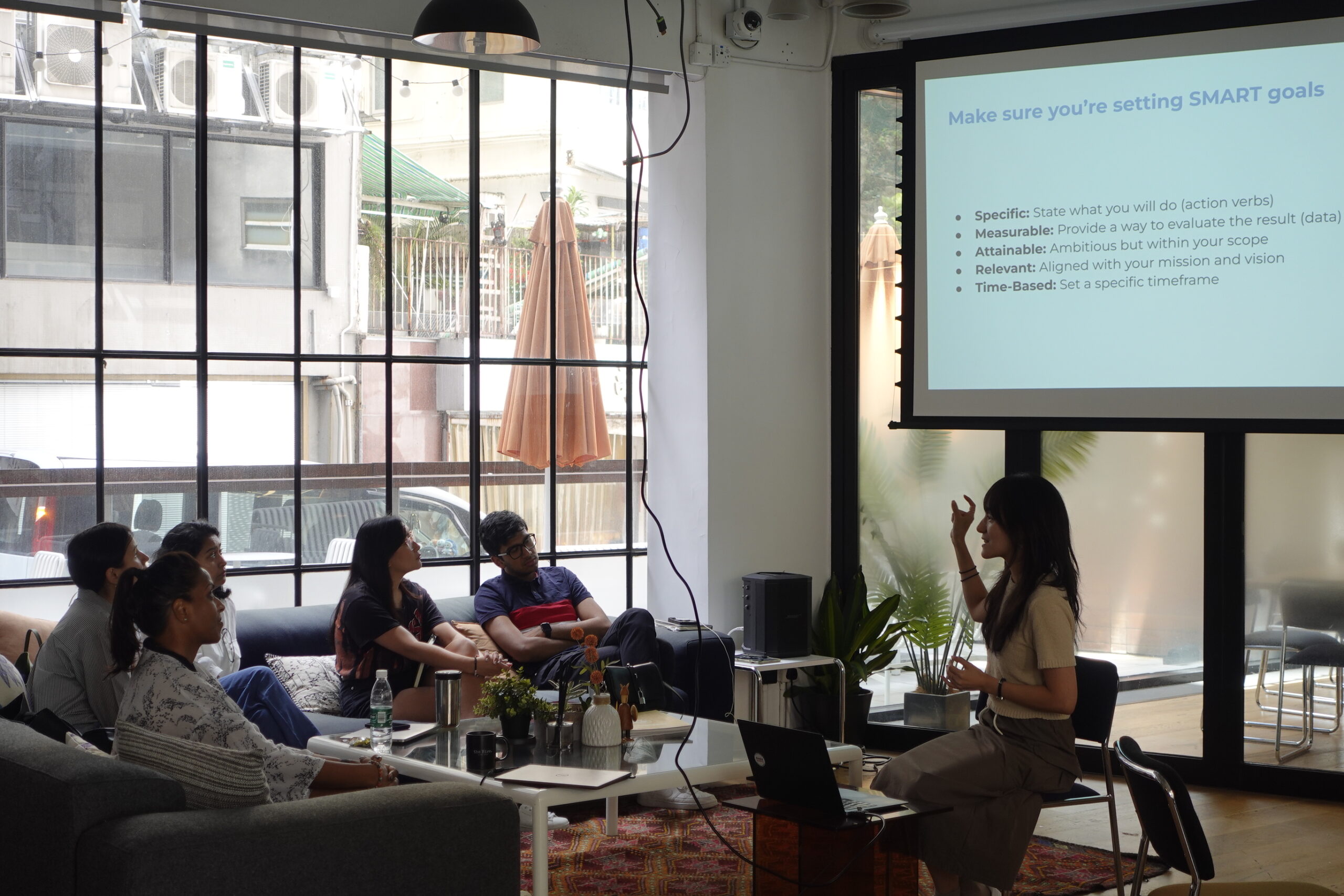
We kick-started the workshop with an interactive activity to pinpoint the factors essential to starting a business, before inviting participants to share their ideas and thoughts and map out the necessary steps going forward.
From the mentees, we learned their take on identifying a target audience, business offerings, and their businesses’ unique selling points. The mentors then contributed by sharing their insights based on their experiences, such as considerations around the operational, strategic, and sustainable aspects of building a business from scratch.
The exercise not only helped mentee entrepreneurs gain a clearer understanding of key business factors but also reminded everyone in the room how creativity and complexity are essential considerations when generating new ideas.
With this broader perspective, the discussion moved on to highlight a crucial insight: focus on the big picture first. This means that by understanding how all the factors of a business work together, entrepreneurs can better identify how their short-term goals will align with their mission statement – the larger purpose they aspire to reach – which helps to define the core mission. One of the things that came out of the open discussion was that the differences between a mission statement and a core mission are that while the mission statement defines the “why” of a business (the reason for its existence), the core mission is the “how” (“How will this business achieve the big mission?”).
According to Naman Tekriwal, Co-founder of Breer, who has been serving as a mentor since the beginning of our Mentorship Program, while a big mission makes a business attractive, “The core vision and mission of a business should remain consistent.” By staying true to the original vision and mission, entrepreneurs will be able to build a more robust relationship with their stakeholders and gain their trust, which is crucial to any business’s long-term success.
Transforming Ideas into Vision and Mission Statements
The conversation then shifted to the purpose and importance of a mission statement. Simply put, a mission statement is a declaration that defines a business’s purpose, values, and goals.
Focusing on this, mentees joined their mentors for small one-on-one sessions to discuss their business goals based on the assignment they were asked to complete prior to the workshop – to craft a mission statement. Now with access to their mentors’ tailored advice and practical guidance, the mentees were more able to align their mission with actionable steps.
While mentees were working on their worksheets and refining their original mission statement, mentors encouraged them to reflect on how their business visions could be executed. Here, the mentors also offered advice on how to break down progressive ideas into a clear, step-by-step plan to achieve strategic goals, while staying aligned with the overall vision of the business. This strategic framework allowed mentees to deepen their own understanding and form a more personal and passionate relationship with their business idea by carving a more realistic and visible path ahead. In doing so, it enables the mentees to create a more ambitious vision without losing specificity and accuracy.
Said Wilson Tai, long-time mentor of the program and Co-founder and COO of FundFluent: “Although you may want to present a big vision to investors to sound more attractive, you do not want the scope of your goal to be too huge. My suggestion is to be very specific about the foundational building blocks developed toward the long-term dreams.”
Mentors also shared their insight on identifying and overcoming challenges while prioritizing tasks and gaining confidence during the process. Both Wilson Tai and Maryam Khan, Founder of Foodie Explorerz and Easy Eat, agreed that marketing and the success of a business hinge on creating and delivering value to a target audience. However, they added that learning from failures is integral to achieving success – trial and error are crucial to developing better strategies to align business operations with the core mission while ensuring profitability.
Said Maryam: “Take time to align your business goals with what the market really needs. When you rush it, you risk misunderstanding where your brand stands and how your audience actually sees you.”
Support Our Work in Uplifting Under-resourced Entrepreneurs
session and explore the principles of vision, mission, goal-setting, and strategic planning. Building on this engagement, the next workshop, held on 18 October in collaboration with Maryam Khan, former-mentee-turned-mentor, will focus on Branding and Marketing.
FSI’s 2025-26 Mentorship Program is funded by the Hong Kong Club Foundation and the Drs Richard Charles and Esther Yewpick Lee Charitable Foundation. Our continuous capacity and impact in empowering under-resourced, ethnically diverse entrepreneurs could not have been possible without our long-time partners such as ICF Hong Kong Chapter, the Hive Hong Kong, FundFluent, and Africa Center Hong Kong. Reach out to us at cbs@shared-impact.com if you would like to join us to uplift under-resourced, impact-driven entrepreneurs in Hong Kong.
*This blog post was written by Kelly Luo, Communications and Marketing intern at the Foundation for Shared Impact (FSI) during the Fall 2025 semester of the Impact Lab Course.