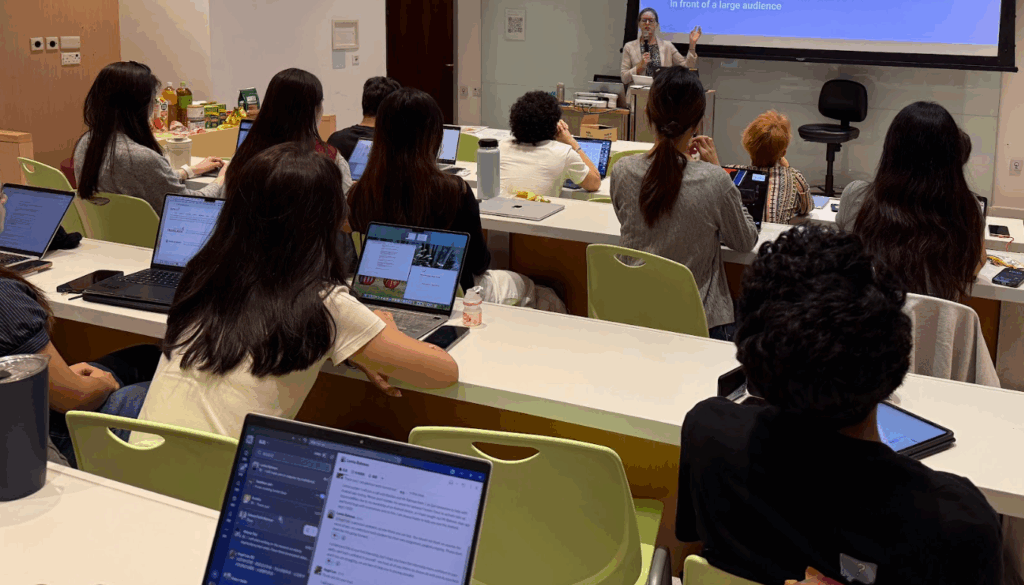
On 29 September 2025, over 40 Impact Lab Course students gathered for the 2025 Fall semester’s first seminar, “Promoting Sustainability Through Design Thinking”. The workshop, led by Lucia Loposova, Demonstrator of the Impact Lab Course and Education Manager at Foundation for Shared Impact (FSI), invited students to experience the creative process of ideation firsthand, challenging them to think beyond constraints and imagine new solutions for a more sustainable Hong Kong.
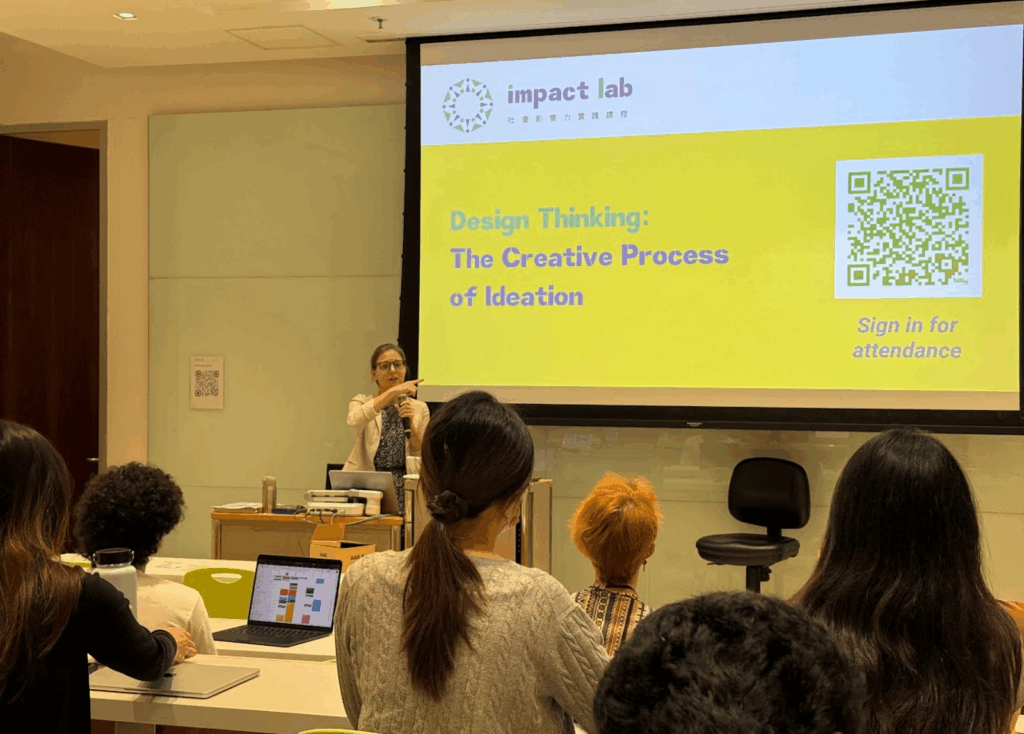
Lucia began by introducing the essence of Design Thinking — a human-centered approach to problem-solving built around empathy, creativity, and experimentation. “It’s about understanding people, observing their behaviors, and redefining problems in a way that lets us imagine what’s truly needed,” she explained.
Lucia further elaborated with a famous quote by Henry Ford, founder of the Ford Motor Company: “If I’d asked my customers what they wanted, they’d have said a faster horse.”
“The point wasn’t the horse,” Lucia continued. “It was about finding faster ways to travel from A to B — using imagination to meet real human needs.”
Throughout the seminar, students chimed in with questions and reflections, turning what could have been a monologue into an energetic dialogue about creativity and practicality.
Thinking Beyond the Box
Before diving into group activities, Lucia posed a playful yet revealing challenge — the Nine Dots Game. On a sheet of paper, students faced nine dots arranged in a 3×3 grid and were asked to connect all of them using only four straight lines without lifting their pens.
At first, the room filled with murmurs and quiet sketches, then bursts of laughter as students realized how tricky it was.
Lucia smiled as she watched the ideas unfold. “Remember,” she said, “sometimes, the only way to solve a problem is to step outside the invisible box you’ve drawn for yourself.”
Soon, creative solutions began to surface. One group proposed tearing the paper and aligning the dots into a single line before connecting them. Another student found a way to connect the dots by alternating between their top and bottom edges, cleverly avoiding the need for a straight path through each center. The classroom buzzed with laughter and applause at each inventive attempt.
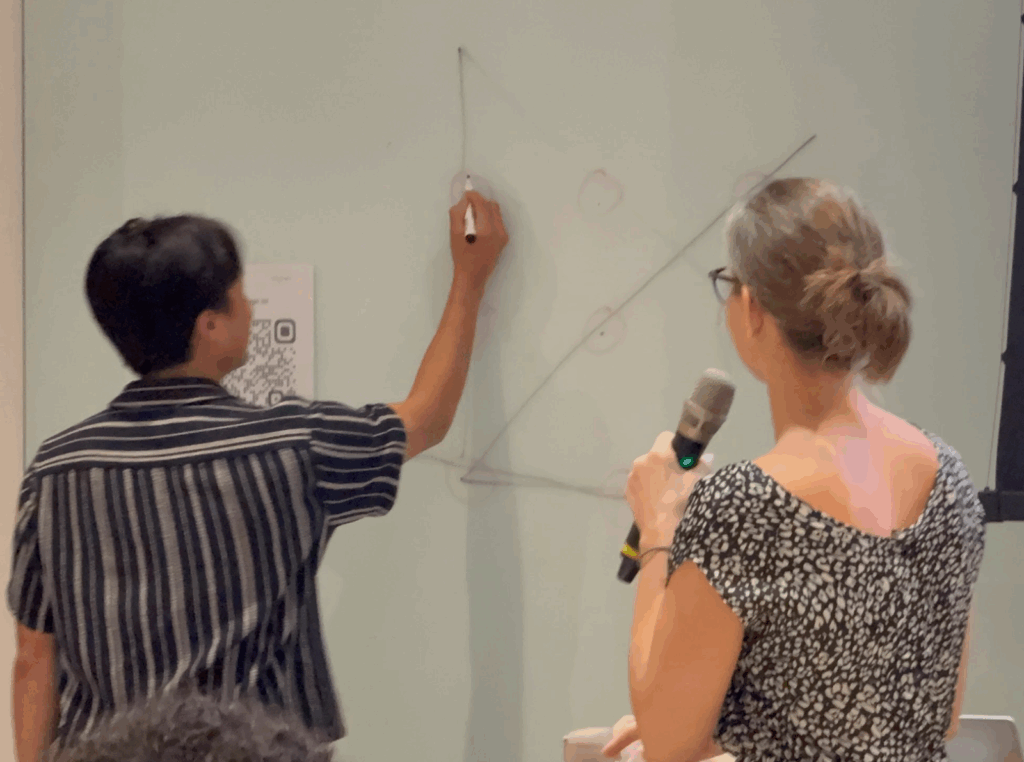
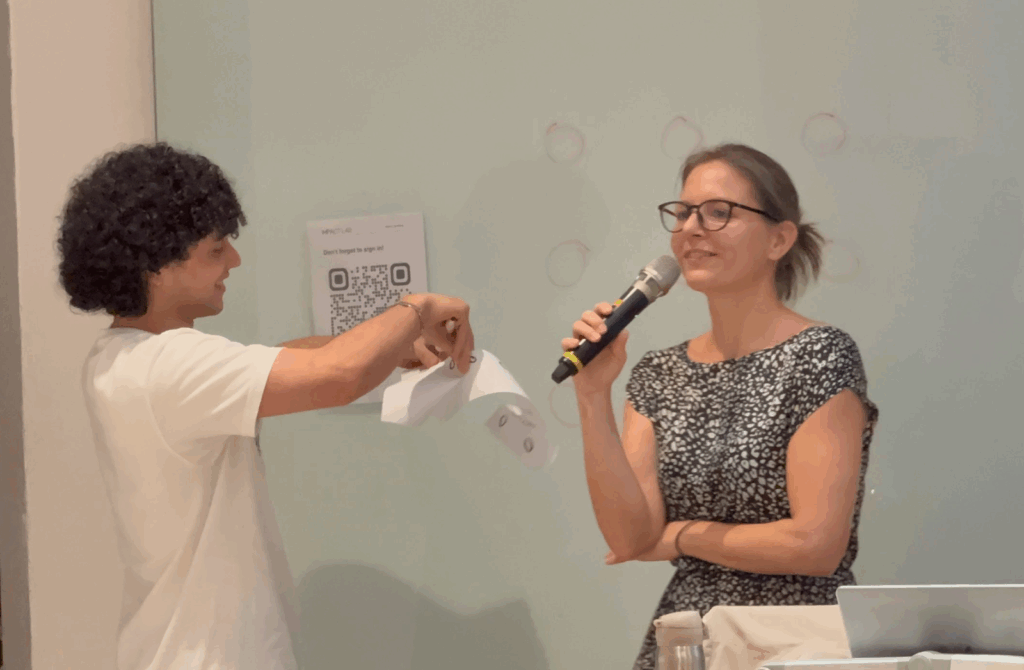
It was a vivid reminder that creativity isn’t about finding the answer, but about seeing possibilities others might overlook.
Ideation in Action
With that spirit, students transitioned into the group ideation exercise, tackling a shared challenge: How might we make Hong Kong more sustainable?
The Executive Director of GREEN Hospitality, which works to transform the hospitality industry into a catalyst for sustainability, Lucia encouraged them to brainstorm freely, reminding everyone that quantity can eventually be distilled into quality in ideation. “No idea is too wild,” she said. “Start with as many as possible, then converge on the ones that truly resonate.”
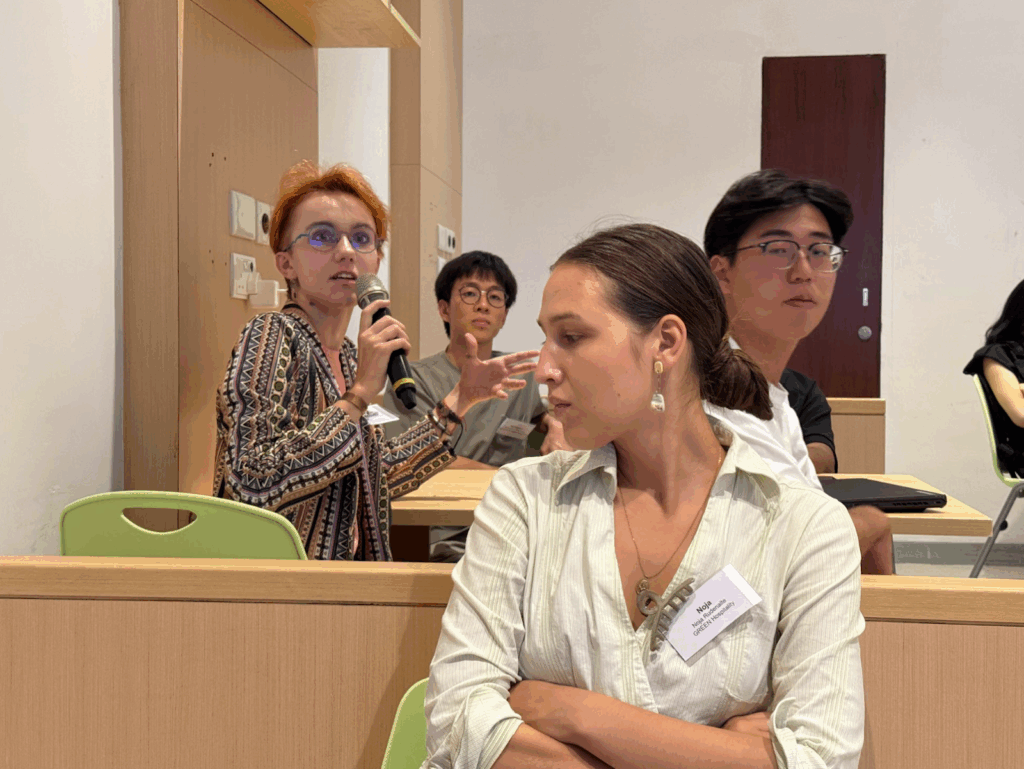
In small groups, students began defining problems and jotting down ideas at a rapid pace. The discussion soon grew animated, and one topic in particular sparked an active debate.
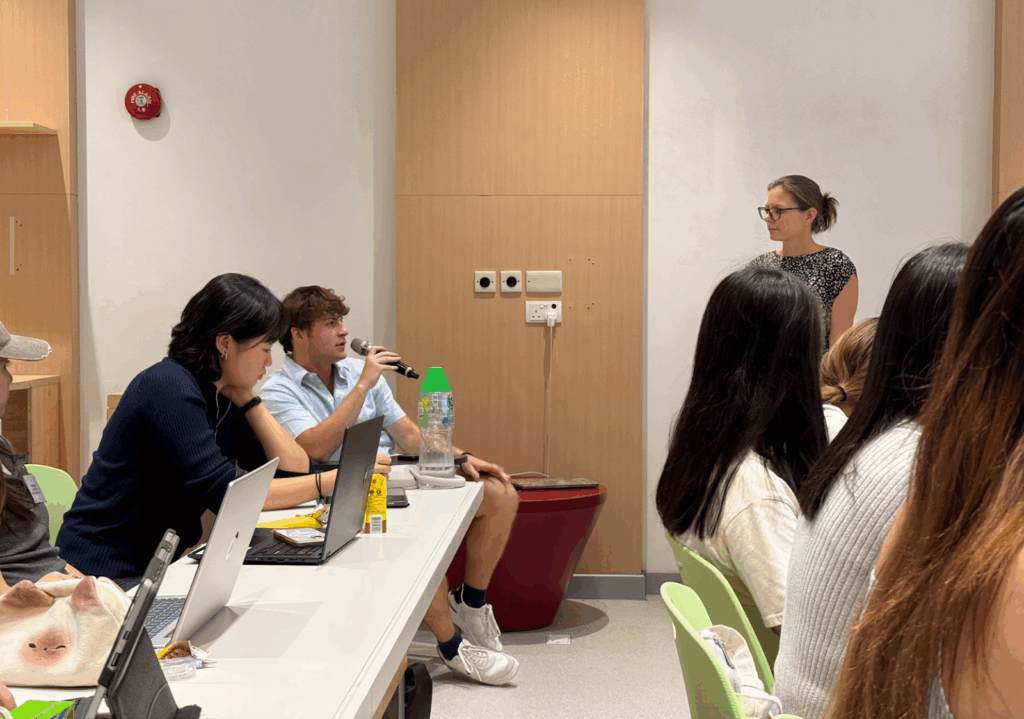
One group proposed decentralizing Hong Kong’s business hubs, arguing that “Central is too packed, too many people are using the MTR to get to Central. We should build more business centers and housing in the New Territories.”
At that moment, David Bishop, Co-founder and Director of FSI and Impact Lab Course Instructor, leaned in with a thoughtful question: “But why do we even need offices? Can’t we work remotely?”
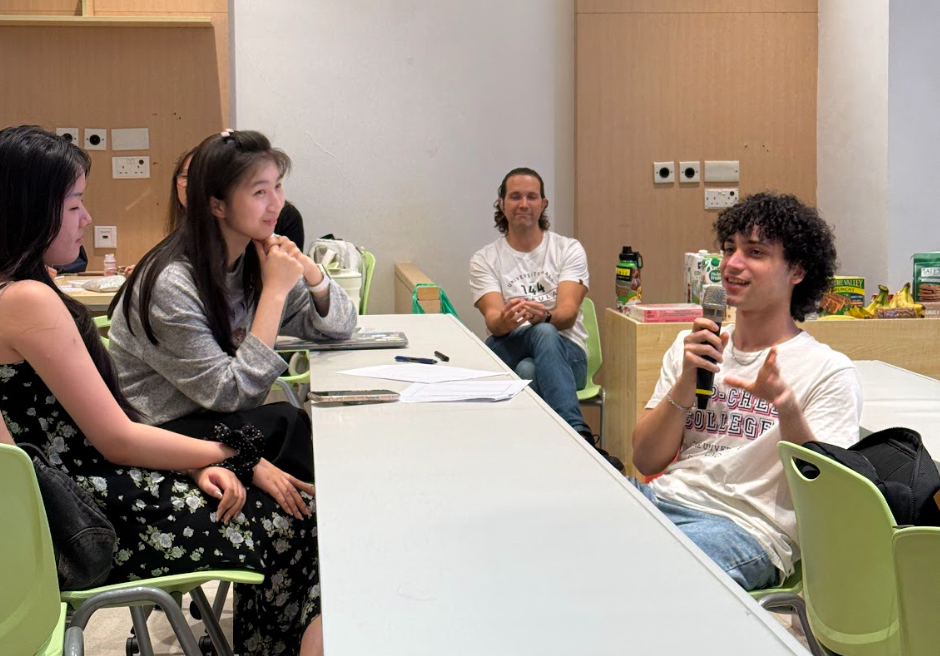
A student quickly responded, prompting laughter from the group: “Because Hong Kong homes are so small! It’s actually easier to work in an office than to stay in our tiny apartments.”
Their exchange reflected the heart of design thinking: challenging assumptions, uncovering human truths, and balancing practicality with creativity.
From Ideas to Impact
Nearing the end of the seminar, groups of students began converging on their most promising solutions. Each team presented two or three ideas worth developing further, ranging from infrastructure redesigns to lifestyle innovations. Some focused on policy, others on technology, but all were rooted in empathy and human insight.
Lucia walked around the room, listening to discussions and offering prompts for deeper, harder thinking. “Don’t stop at what’s realistic,” she encouraged. “Ask what could be possible.”
By the end of the two-hour session, the worksheets were covered in colorful notes and diagrams. What began as scattered thoughts had evolved into seeds of tangible, sustainable change — and, just as importantly, into stronger bonds among the participants.
Looking Ahead
The seminar concluded on a high note, with Lucia reminding students that creativity thrives in collaboration. “Design Thinking isn’t just a process,” she said. “It’s a mindset — one that begins with empathy and ends with action.”
As students packed up their notes and chatted about their favorite moments, the energy in the room was unmistakable: a shared sense that innovation begins not with answers, but with better questions.
Through the Impact Lab Course, FSI continues to nurture this mindset, helping students turn creative thought into meaningful impact through experiential learning and collaboration with purpose-driven startups.
Stay tuned for the upcoming seminars on “Learning from Failure: Mastering Risk Management” and “Systems Change”.
*This blog post was written by Toshiya Oh, Communications and Marketing intern at the Foundation for Shared Impact (FSI) during the Fall 2025 semester of the Impact Lab Course.