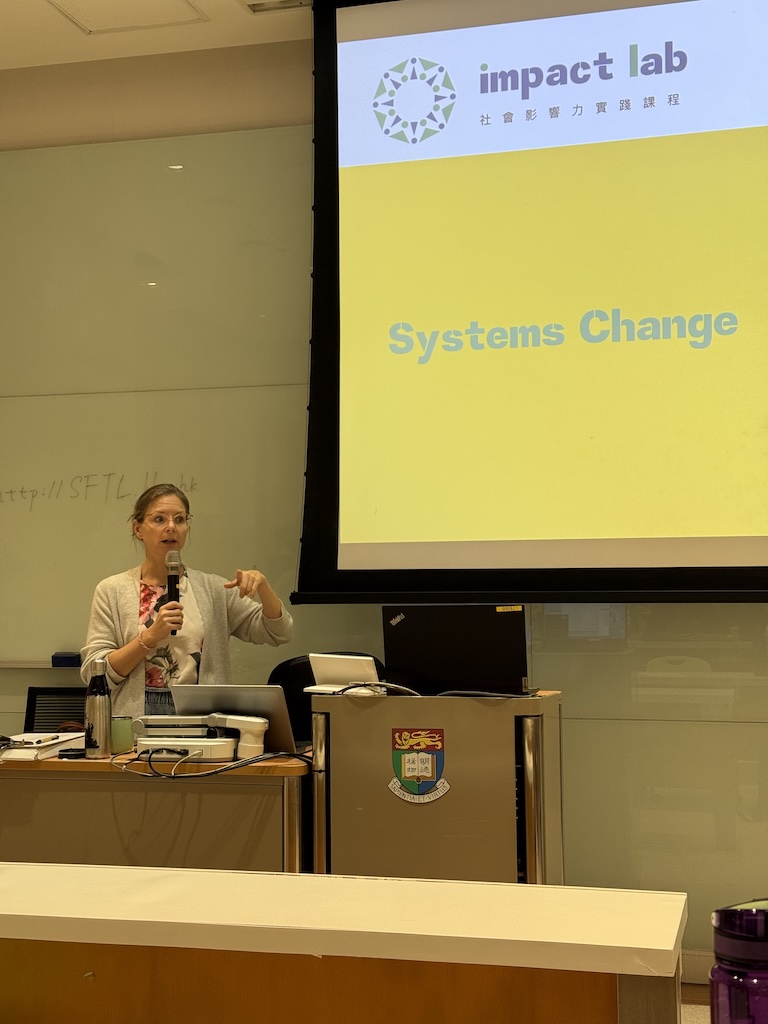
On 10 November, students from the Fall 2025 cohort of the Impact Lab Course gathered for the semester’s third seminar, “Systems Change”, co-led by Lucia Loposova, Education Manager at Foundation for Shared Impact (FSI) and Demonstrator of the Impact Lab Course, and David Bishop, Course Instructor and Co-founder and Director at FSI.
Lucia started the seminar with a quote by Mahatma Gandhi, projected on the screen: “Be the change you want to see in the world.” She then posed a question to the students: “What do you think is the true meaning of a ‘changemaker’?” Distilling the students’ ideas down to one sentence, Lucia said: “A changemaker is someone who identifies what needs to change and acts despite resistance or uncertainty.”
Understanding Systems and Change
Lucia then talked about the bedrock of effective changemaking: understanding systems. “To drive meaningful change, we must first recognize the systems that underpin problems,” she explained. “A system is a network of relationships — political, economic, educational, or environmental — and they are all interconnected.”
She emphasized the complexity of systemic transformation: “It’s not easy to change systems, because systems are made of relationships, power, and habits.” The critical strategy, she noted, lies in leverage points: “However, even a small change at the right leverage point can transform the whole system.”
The Role of Changemakers
Circling back to the opening question, Lucia expanded on the essence of changemakers. “True changemakers start with themselves before trying to fix the world,” she stressed. “A changemaker begins with themselves, the only person they can truly change.” Here, Lucia highlighted three indispensable traits of a changemaker: “Courage, empathy, and persistence matter more than position or authority. What matters is not the scale of your action, but the courage to begin.”
The Tipping Point and How Change Spreads
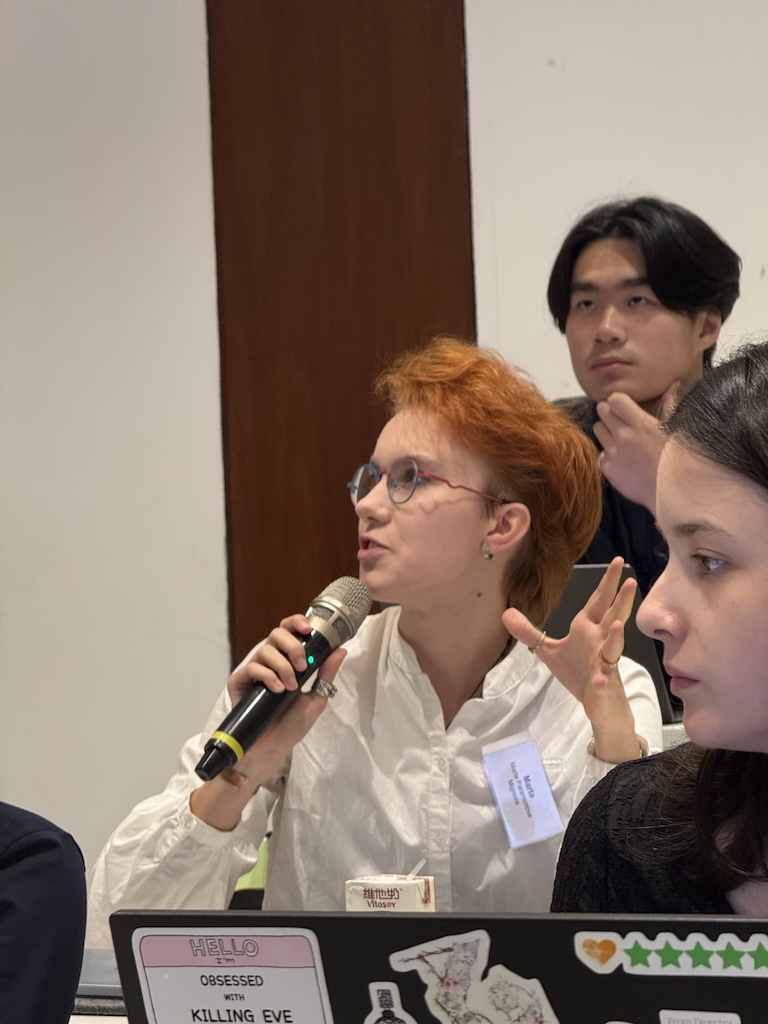
Next, Lucia introduced the famous “Tipping Point” theory by journalist and author Malcolm Gladwell to illustrate how small efforts escalate into large-scale impact. “Big social shifts often start with a small, committed group,” she explained. “Once about 10% of people truly believe in something, their conviction can influence the rest.”
The tipping point is when a critical mass is formed and which makes rapid and dramatic behavioral changes by adopting a previously rare practice. However, such a successful tipping point cannot be reached without three core elements, explained Lucia. First, change is driven by a small number of highly influential people, and these are individuals who are great at connecting people and people with information, as well as people who excel in persuasion and negotiation.. Second, for an idea to spread, we need a message that is sticky, meaning that it is adequately memorable, engaging, and impactful to leave a lasting impression and mobilize action. Third, environment, circumstances, and conditions – in other words, the context – are crucial for the tipping point to happen.
“We don’t need everyone to believe the idea,” said Lucia. “We need only a few who believe deeply enough to act. Small groups can spark massive social change. A sticky message changes minds, and a moving story changes systems.”
Measuring Progress: Is the World Getting Better?
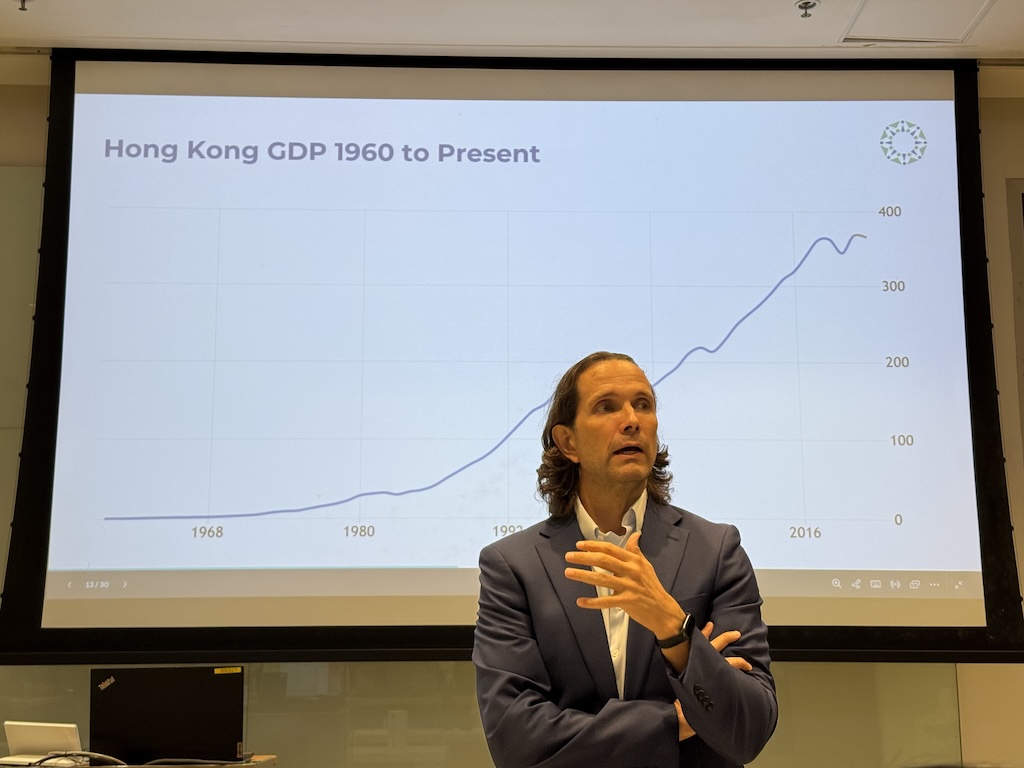
David took over the seminar from herewith a data-centric exploration exercise paired with historical footage: “After examining how change spreads, let’s address a critical question: Is the world actually getting better?”
He shared statistics on economic development alongside historical footage of Hong Kong, Singapore, and California — cities once grappling with significant challenges few anticipated, yet transformed through collective effort. “Globally, the poverty rate fell from 30% to under 10% in recent decades; worldwide, there are fewer wars, higher literacy rates, longer lives, shorter working hours, and greater access to education,” said David. “However, progress is not automatic. It depends on the people who believe in reason and act on hope. Don’t let your worldview be shaped only by news headlines. The world has improved not by chance, but by human effort guided by reason.”
Systems Change in Practice: Analyzing Hong Kong’s Abandoned Waste-Charging Scheme
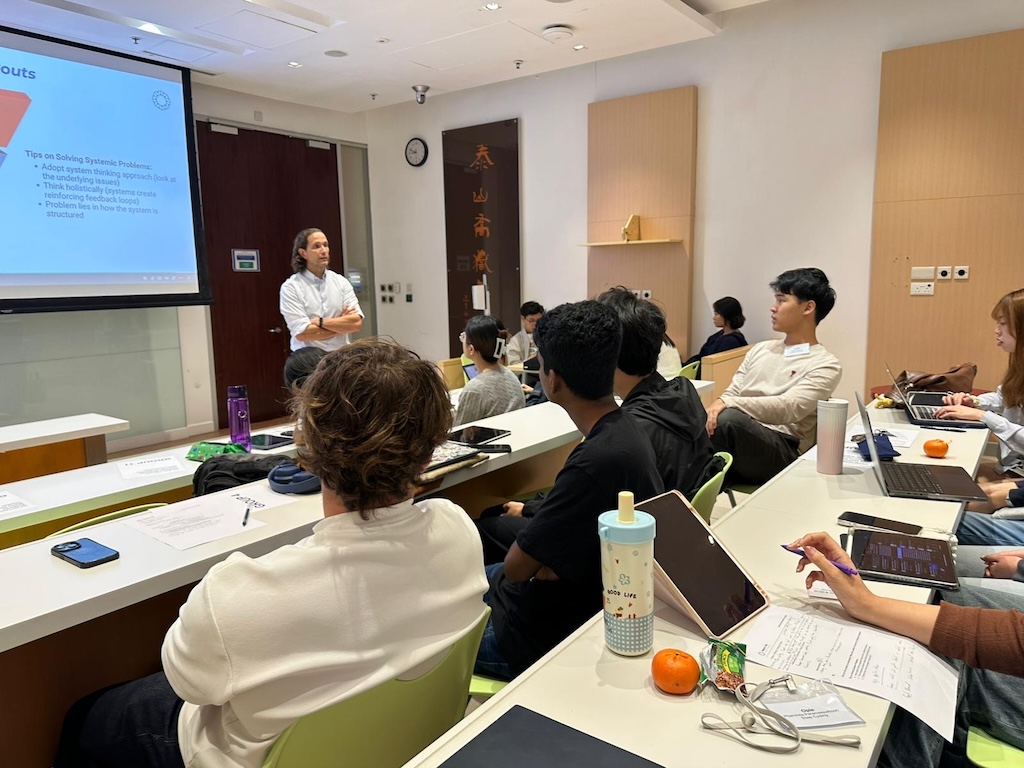
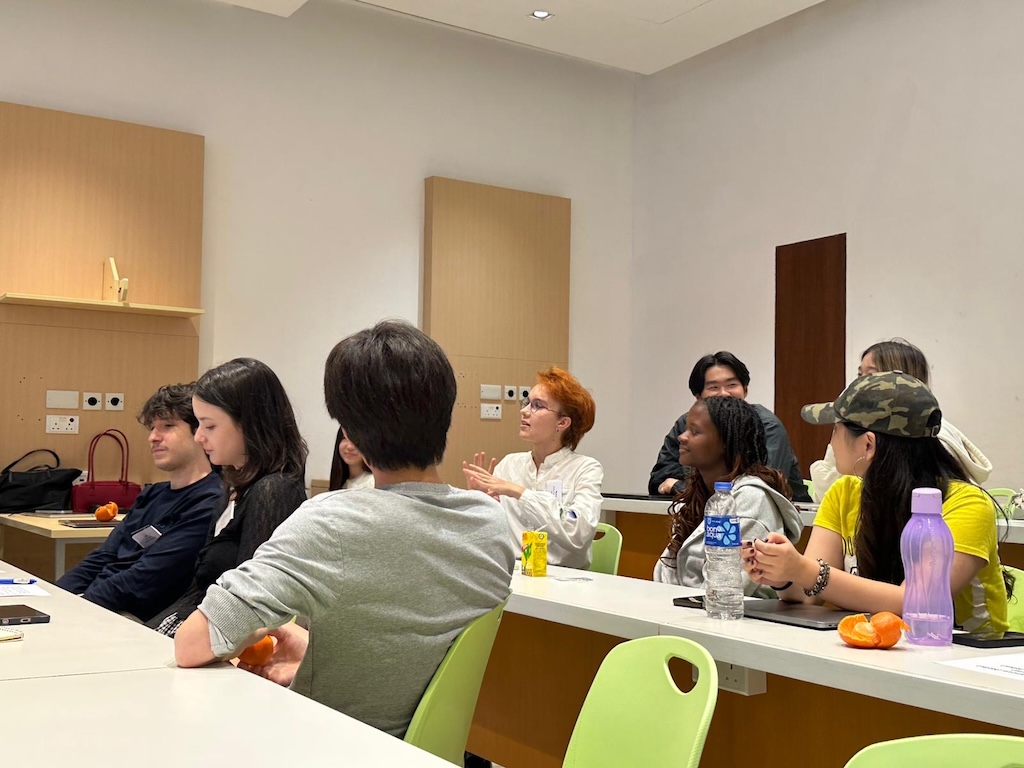
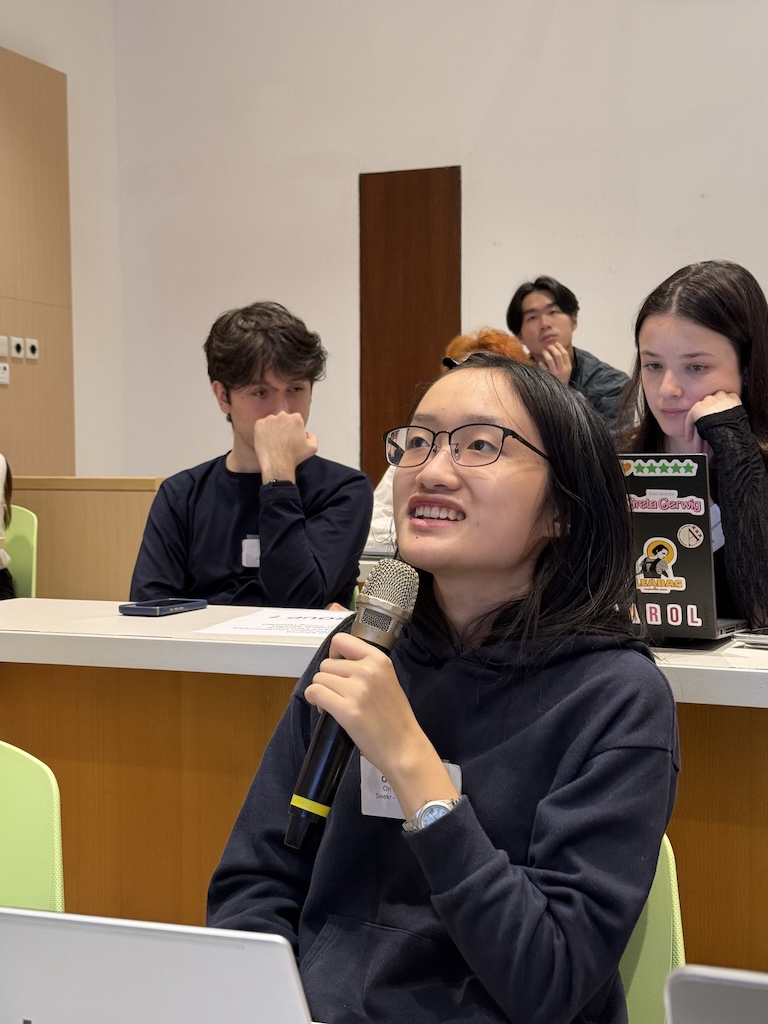
The seminar culminated in a group discussion led by David, focused on systems change in practice. Using a timely local issue, Hong Kong’s abandoned waste-charging scheme that was scrapped due to economic pressures, he guided students to analyze the failure using a reverse pyramid model, mapping three layers of systemic change:
- Explicit: Structural elements such aspolicy and resource flows
- Semi-explicit: Power relationships and connections
- Implicit: Mental models
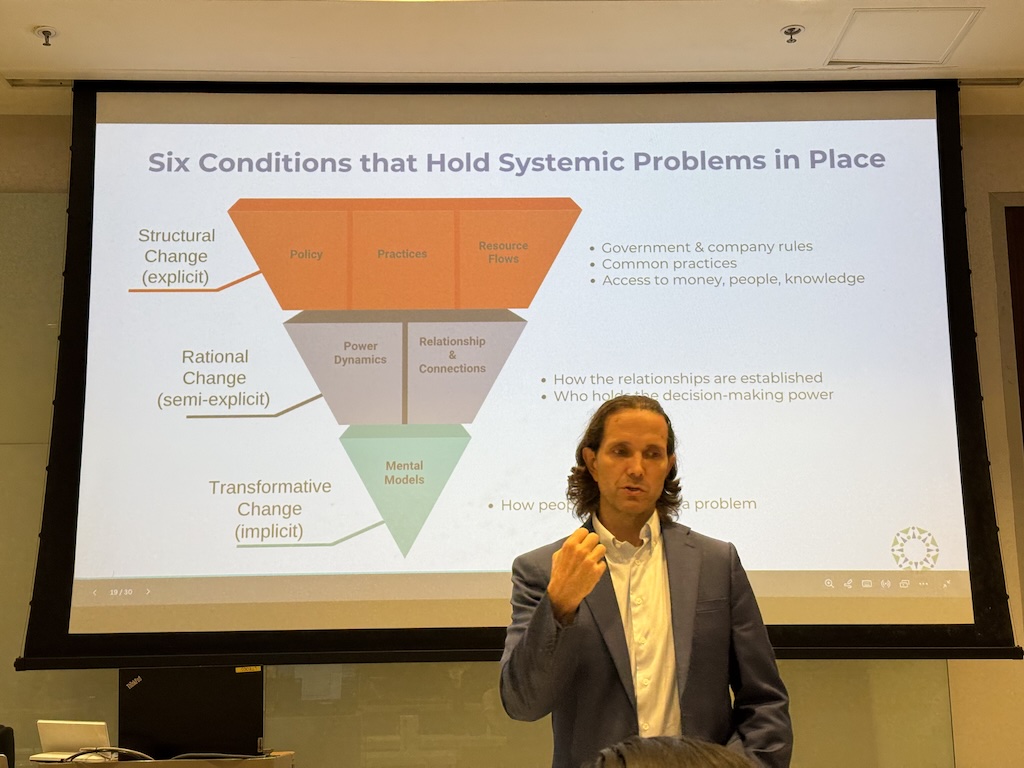
“Use this model to identify the systemic roots of the scheme’s failure, beyond surface reasons,” David instructed. Following the group discussion, David elaborated on how real transformation requires rethinking mental models, not just fixing symptoms. “Effective changemakers understand where power lies, build trust, and shift perspectives. Systems don’t change until people change how they think. Technology makes change faster, empathy makes it meaningful, and progress happens when courage meets understanding.”
By the end of the seminar, students had gained a clear framework essential to any changemaker: start with oneself, understand the system, identify leverage points, and stand with the committed 10% to drive lasting change.
Through the Impact Lab Course, FSI continues to equip young changemakers with the skills, knowledge, and mindset to tackle complex challenges. Learn more about our youth empowerment work and contact us at education@shared-impact.com to find out how you can join us to nurture the impact-driven leaders of tomorrow.
*This blog post was written by Kevin Shao, Communications and Marketing intern at the Foundation for Shared Impact (FSI) during the Fall 2025 semester of the Impact Lab Course.