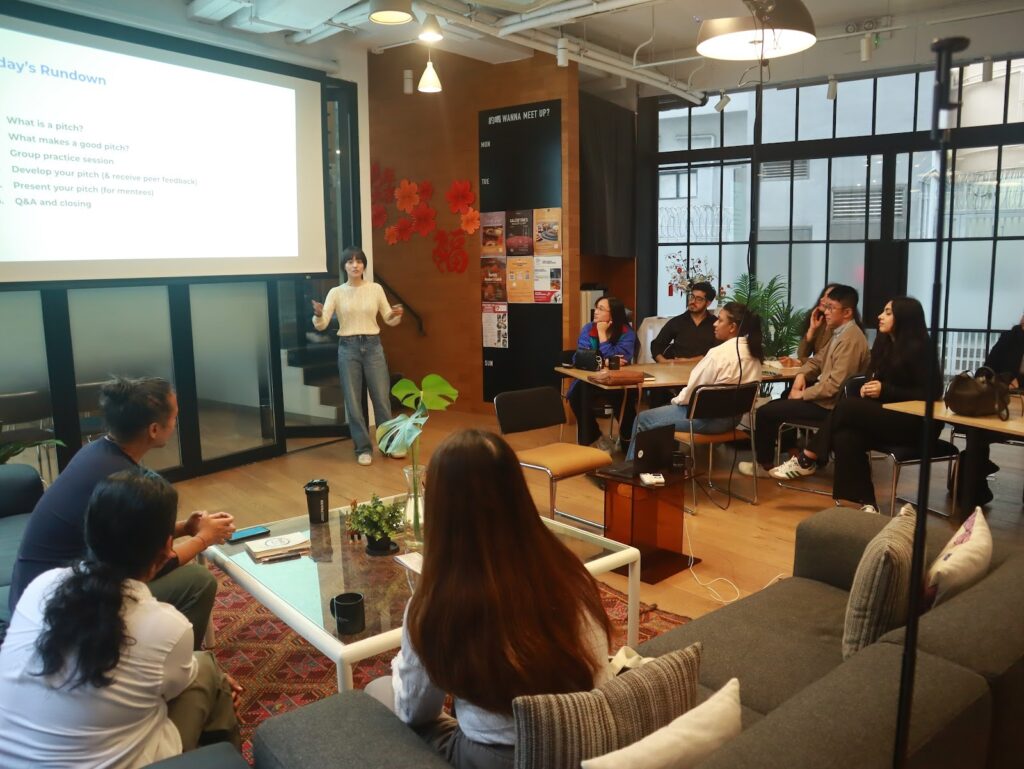
On 7 February 2026, the 2025-26 cohort of our Mentorship Program for Ethnically Diverse Entrepreneurs gathered at the Hive Poho for the second-to-last session. Titled “Pitch Perfect”, the two-hour pitch workshop focused on equipping mentees with one of the most essential skills in entrepreneurship: the ability to communicate ideas with clarity and confidence as well as purpose.
With the program finale slated for early March, the entrepreneur pitch workshop marked a meaningful point in the cohort’s journey – the mentees are no longer simply refining their business models; they are also preparing to present themselves, their ventures, and their vision to investors, partners, and communities. In many ways, this workshop was about stepping into leadership.

Curating a Perfect Pitch with Enhanced Clarity and Confidence
The session began with the question, What pitching opportunities do you have coming up? The answers ranged from funding conversations to partnership meetings. The discussion then switched to highlighting the importance and practicality of pitching, which is not reserved for investor panels only. Pitching, in its various forms, happens every day: in a networking conversation, a grant application, or a meeting with a potential collaborator; it even happens in informal situations such as a short introduction at a community event.
At its core, a pitch is not just storytelling but also a strategic act of communication made to shift the targeted audience or listener toward a specific stance.
Instead of asking mentee entrepreneurs to memorize scripts, the workshop introduced a practical and adaptable structure: the AREA framework. Mentee entrepreneurs were encouraged to think first about their Audience – who they are aiming to speak to and what matters to them. From there, they were guided to clarify Relevance – why this person should care; Evidence – why they should believe in the solution; and the Ask – what specific next step they are inviting the listener to take.
Through “before and after” examples, participants saw how small adjustments in clarity and confidence could transform a pitch. A vague introduction became a compelling proposition simply by aligning the message with the listener’s needs. You must ask: What is the market at that moment? What materials do you need to make it possible? Technology is cool, but it shouldn’t be the core; focus on your passion, and let technology be the tool that elevates it. Throughout the session, the emphasis stayed on the importance of alignment with needs over performance. A strong pitch is not that much about sounding impressive; it is about being intentional.


The workshop was filled with the presence of mentees, mentors, coaches, and volunteers from FSI’s partner network, including representatives from our corporate partners Johnson Stokes & Master (JSM) and PayPal. Their participation reinforced a powerful message: pitching is practical. It happens daily in boardrooms, law firms, corporate strategy discussions, and community organizations.
Guest speakers brought this reality to life. Rachel Fok, with experience at a local grant-giving foundation, reflected on how pitching is central to securing buy-in from NGO founders and stakeholders. Gordon Chan, a Community Impact Committee member at PayPal, highlighted that in the corporate world, selling an idea is not just about closing a transaction but about building long-term support and partnerships. Alan Lau, Responsible Business Lead at JSM, spoke about pitching both internally within a law firm and externally to community partners, showing how universal the skill truly is.
Importantly, “Pitch Perfect” was not structured as a competition. There were no judges and no rankings. Instead, the session was designed as a safe space for experimentation and growth. After reviewing the AREA framework, participants moved into small groups where volunteers provided constructive feedback. Mentees were then given time to develop a pitch tailored to a specific audience scenario.
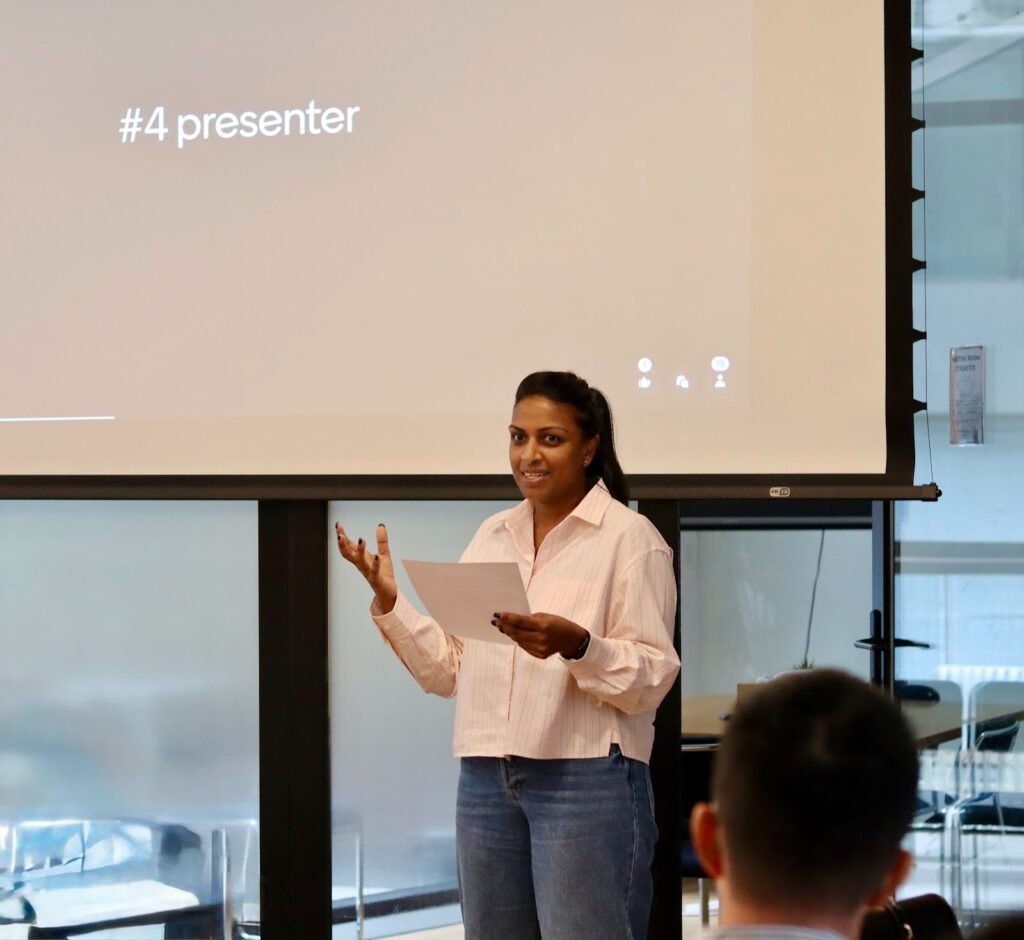
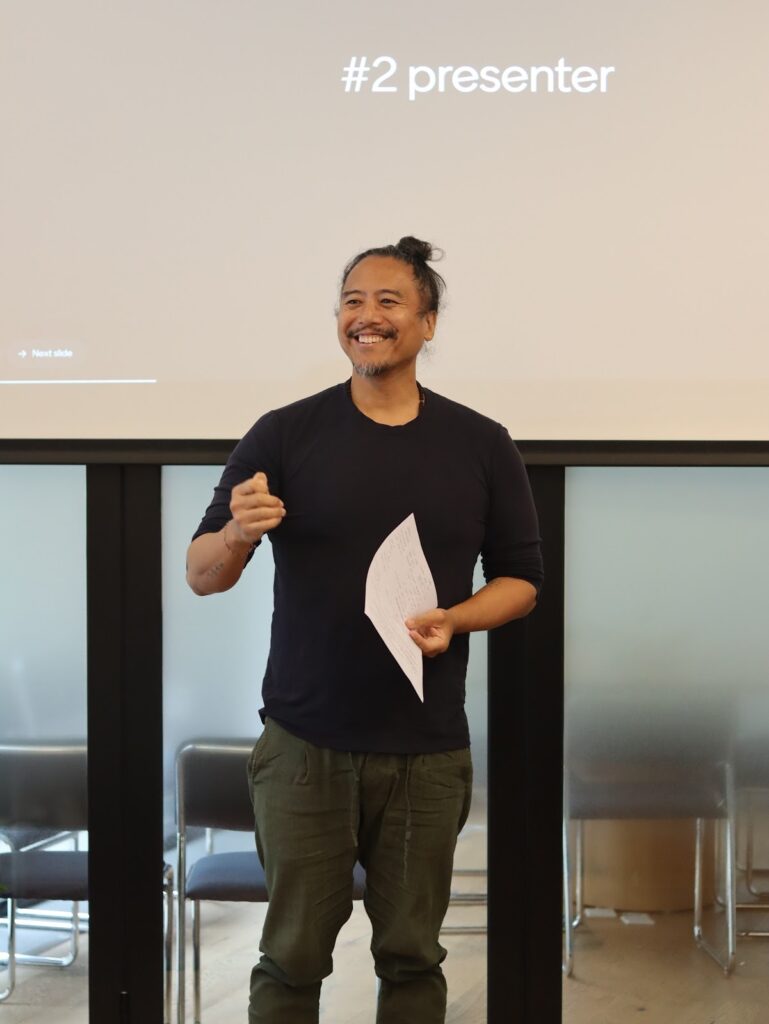
All mentees presented their pitches to the full room, with feedback collected anonymously to ensure it remained supportive, allowing space for growth. Each presentation reflected months of both business and personal growth. Businesses that once existed only as ideas now displayed confidence and experience. One mentee shared that having a clear framework made pitching feel manageable rather than overwhelming, allowing for the preparation of a concise and effective pitch. Another mentee highlighted how valuable it was to receive feedback from industry professionals who could offer practical insight.
Beyond the mechanics of pitching, the session also displayed deeper transformations within the cohort. Mentors celebrated incremental progress, embraced setbacks as learning opportunities rather than something negative, and combined passion with research and practicality. As Jerwine Bonafe-Que, Managing Director of The Blomstre and a former-mentee-turned-mentor put it, “Learn to celebrate the grind itself, not just the final result. Sometimes, just voicing it and getting a fresh perspective made mountains shrink into molehills. So celebrate every step, ask the right questions, stay consistent, and never underestimate the power of talking things out.”
And perhaps, that is the true art of pitching – not just convincing others, but also believing in your own ideas enough to want to share them boldly.
Get involved
As the cohort prepares to step onto the finale stage, one thing is evident: these entrepreneurs are no longer just aspiring entrepreneurs with ideas and concepts; they are confident communicators and community builders ready to make their next ask.
If you would like to support our community of under-resourced ethnically diverse entrepreneurs, whether as a sponsor, subject matter expert, or skills-based volunteer, get in touch with us at cbs@shared-impact.com.
*This blog post was drafted by Sofia Becerra Liang, Communications and Marketing intern at the Foundation for Shared Impact (FSI) during the Spring 2026 semester of the Impact Lab Course.



Pingback: doxycycline hyclate 100 mg cap
Pingback: mobic meloxicam 15 mg
Pingback: linezolid antibiotic tablet
Pingback: lasix medication
Pingback: doryx 50mg capsule
Pingback: cialis peak performance
Pingback: tadalafil farmacias similares
Pingback: does dapoxetine expire
Pingback: semaglutide tablets starting dose for weight loss
Pingback: doxycycline price mercury drug
Pingback: can doxycycline cause sore throat
Pingback: metronidazole topical cream brand name
Pingback: acyclovir 1gm dosage
Pingback: saxenda dosing canada
Pingback: toradol drug profile
Pingback: toradol short term use guide