In a thought-provoking seminar hosted by the Impact Lab Course, students explored how creativity, sustainability, and purposeful problem-solving intersect through the lens of design thinking.
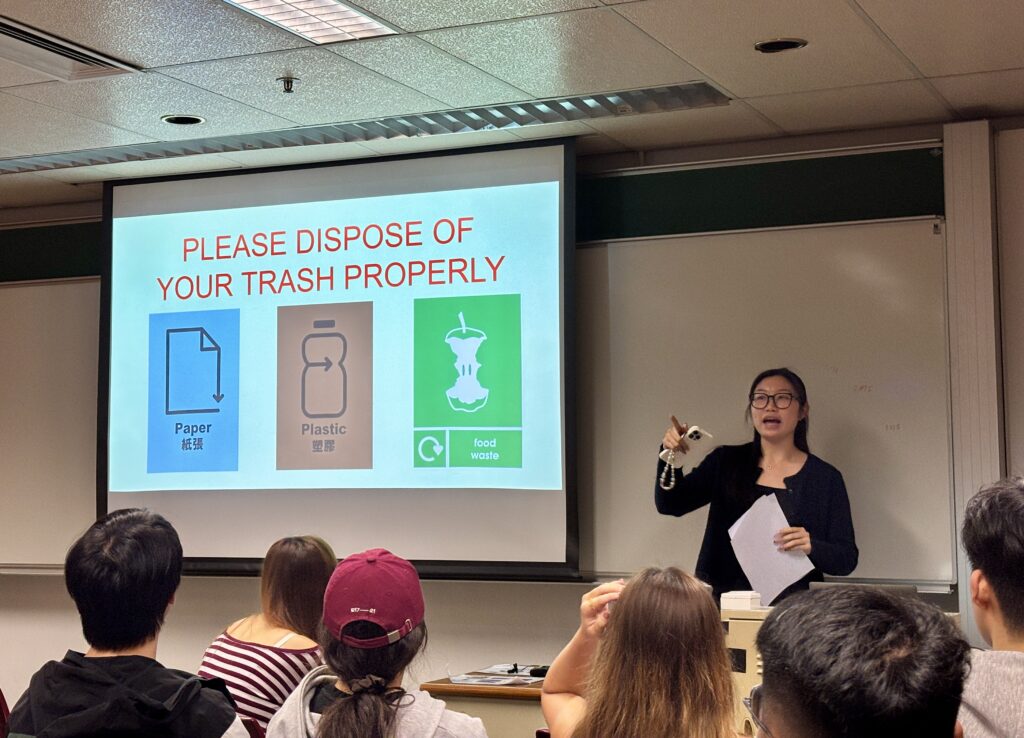
To kick off the seminar, participants received a friendly reminder from Shitong Wu, FSI’s Youth Empowerment Intern, to take action for the planet by recycling their trash. Students were given refreshments and encouraged to place their used items into the recycling bins — a fitting start to a session centered on mindful innovation and sustainability.
Unlocking the Creative Mind
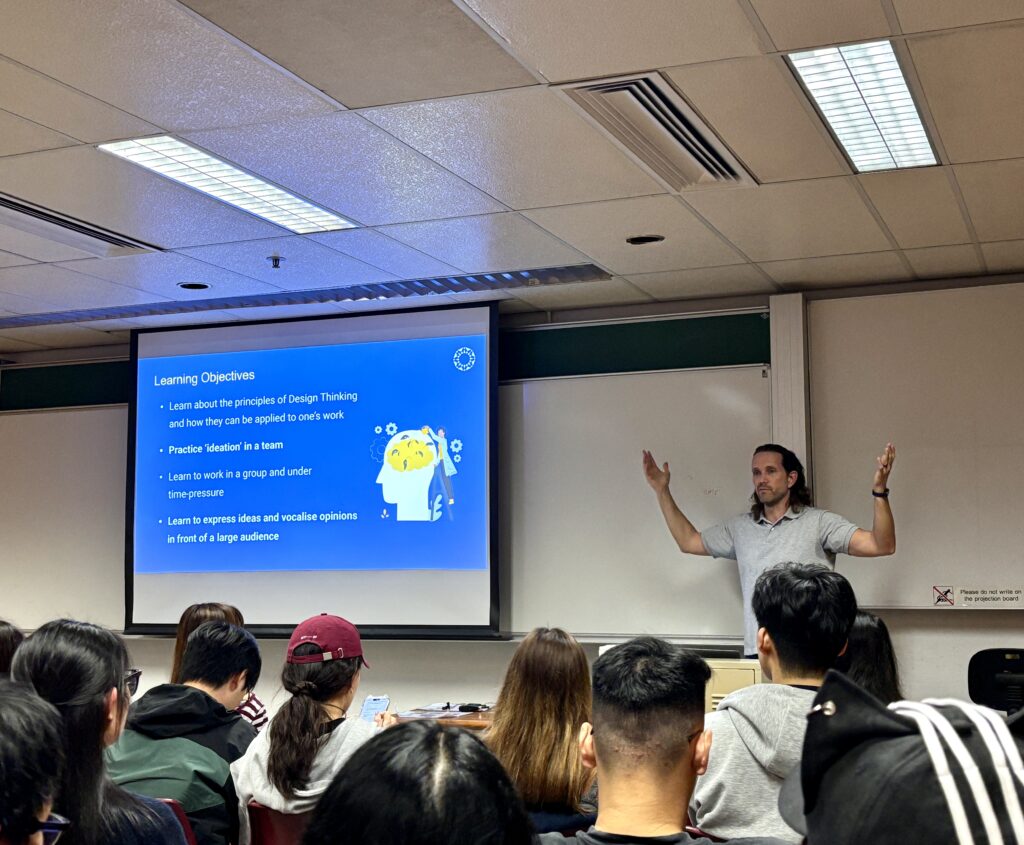
The session’s facilitator, Professor David Bishop, Co-founder and Director of Foundation for Shared Impact and Impact Lab Course Instructor, began by sharing how he moved from a structured legal career in the US and Hong Kong into teaching at The University of Hong Kong (HKU), where he said he could finally let ideas “flow like crazy”. His colleagues even joke that the phrase they worry about most is when he says, “I have an idea.”
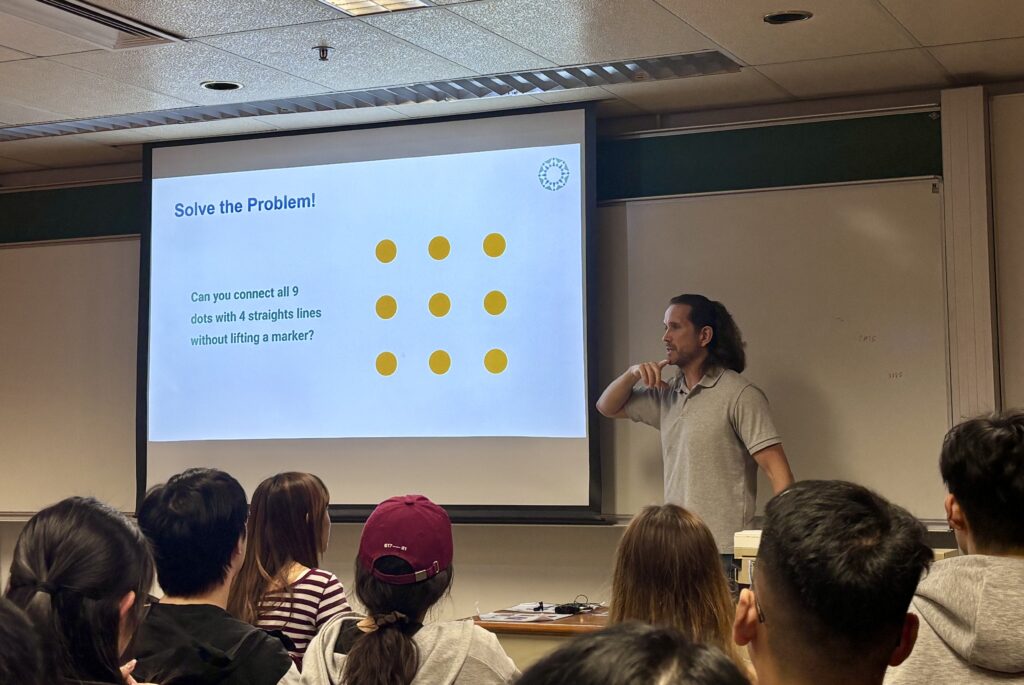
This moment set the tone for the day’s key message: be open to ideas, and always record them the moment they come. The brain is like a muscle: it grows stronger the more creatively you exercise it.
The Four Stages of Design Thinking
David then walked students through the four stages of design thinking — Clarify, Ideate, Develop, and Implement — highlighting that innovation is rarely a straight line, but an ongoing process of exploration, failure, and refinement.
In the Clarify stage, he stressed the importance of fully understanding the problem before jumping to solutions, reminding everyone to “think inside before outside the box” and to see failure as a natural part of the creative journey.
Moving into Ideate, participants were encouraged to generate as many ideas as possible without self-censorship. Echoing a familiar Cantonese saying, 好記性不如爛筆頭 — a good memory is not as reliable as a bad pen — he urged students to write everything down and capture every thought.
The Develop stage subsequently focuses on combining, testing, and refining those raw ideas into more practical, workable solutions.
Finally, in the Implement stage, David emphasized that execution should always be accompanied by reflection, asking repeatedly, “Are we solving the right problem?” so that teams remain open to revisiting earlier stages when needed.
Sustainability: Rethinking Systems and Mindsets
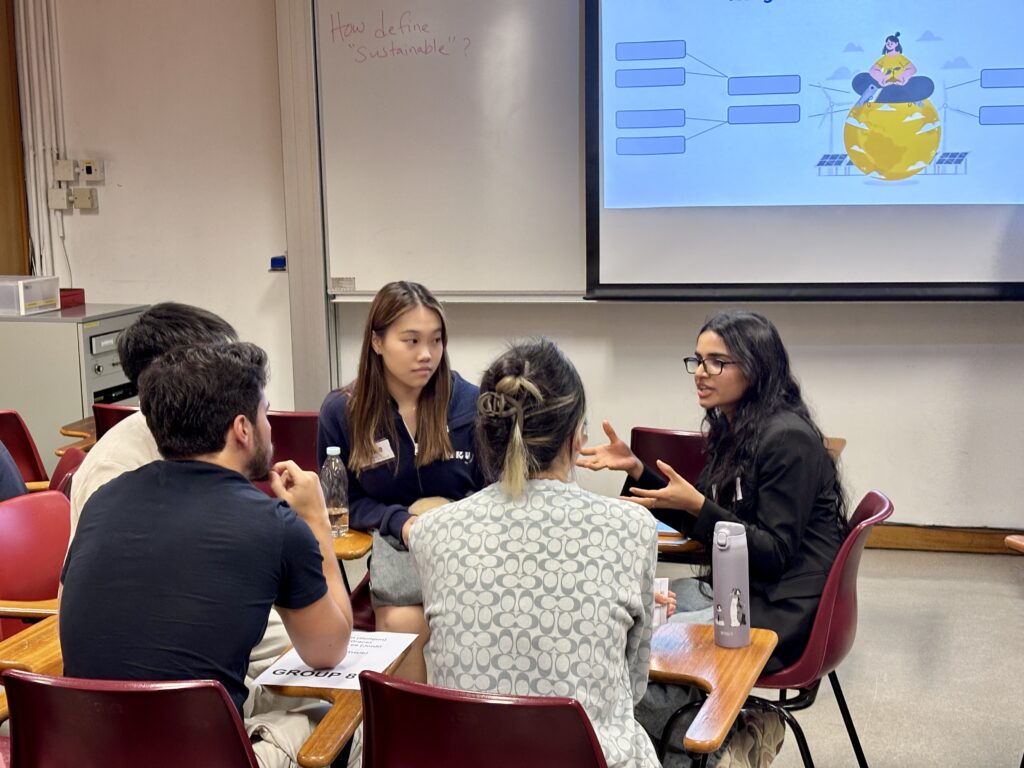
Next, students broke into groups to tackle a thought-provoking challenge: “How can we get Hong Kong citizens to lead a more sustainable life?” This brainstorming session illuminated a range of innovative proposals. Teams had to mind-map solutions in just five minutes, but many quickly realized the hardest part was defining the problem itself.
For instance, when one group identified “people are lazy to recycle” or “lack of awareness” as the main issue, David encouraged them to dig deeper. Eventually, teams reframed the central issue as solid waste— whether from fast fashion or overpackaged food. One group proposed vending machines for vegan meals that reward users for returning packaging, but David reminded the class that sustainability isn’t only about the environment — it’s about rethinking systems and mindsets on a larger scale.
Ethics, AI, and Purpose
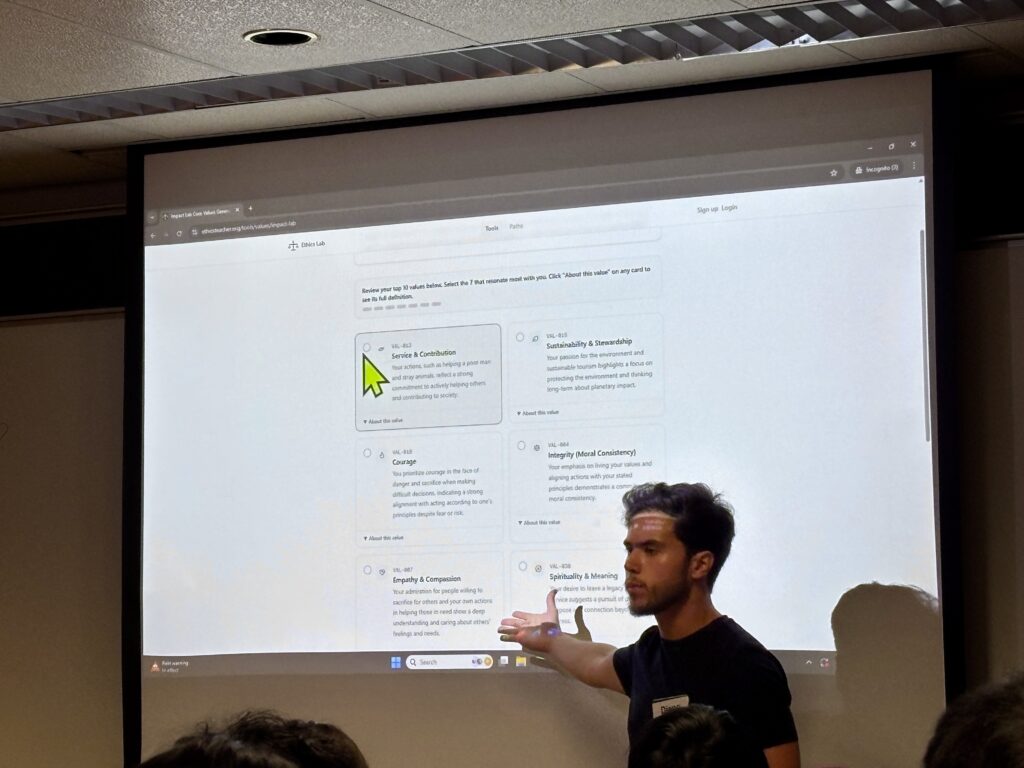
The seminar closed with an insightful presentation from Diego Eugenio Uribe Rodríguez, an Impact Lab student, who introduced Ethics Lab, an ongoing project and digital platform designed by David and a few Impact Lab students, to help users understand their values and lead more purposeful lives. The presentation illustrated how technology, ethics, and empathy can come together to create genuine social good within everyday decision‑making.
David ended the session with a reminder: “Don’t be afraid to do crazy things. Go wild. That’s when your brain truly opens up.” His words encapsulated the spirit of the seminar: creativity isn’t confined to design; it’s a mindset, a willingness to fail, learn, and try again with greater clarity.
Stay Tuned
Through our Impact Lab Course, we support students to develop themselves and enhance essential human skills through experiential learning internships with impact startups as well as thematic seminars. Stay tuned for updates on the upcoming seminars on “Learning from Failure: Mastering Risk Management” and “Systems Change”.
This blog post was drafted by Cheung Hoi Ching Karina, Communications and Marketing intern at the Foundation for Shared Impact (FSI) during the Spring 2026 semester of the Impact Lab Course.