/Business Support, Impact Stories, Mentorship Program, Perspectives/ May 2026 / 6 minutes of reading
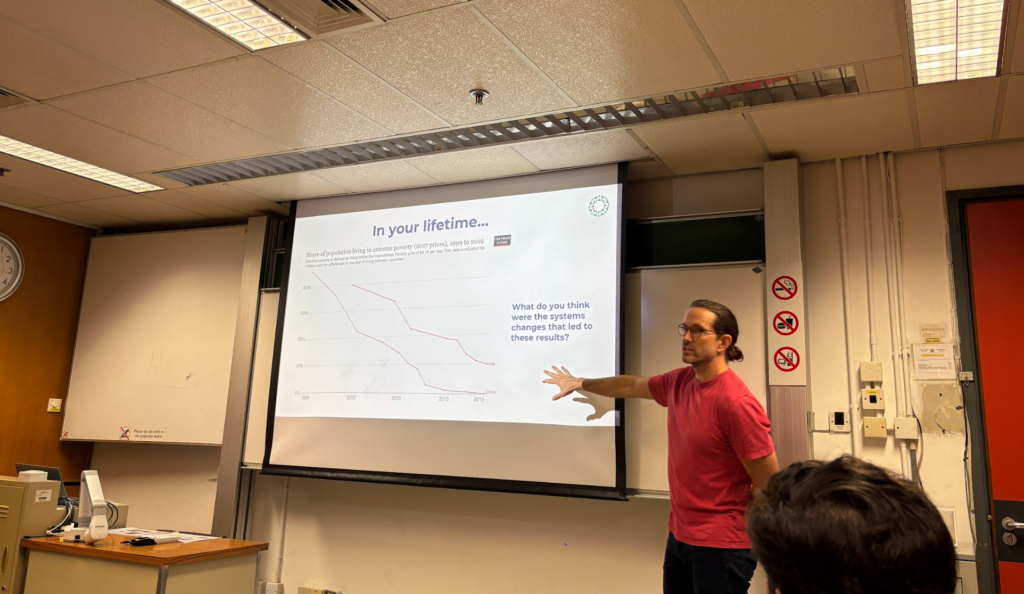
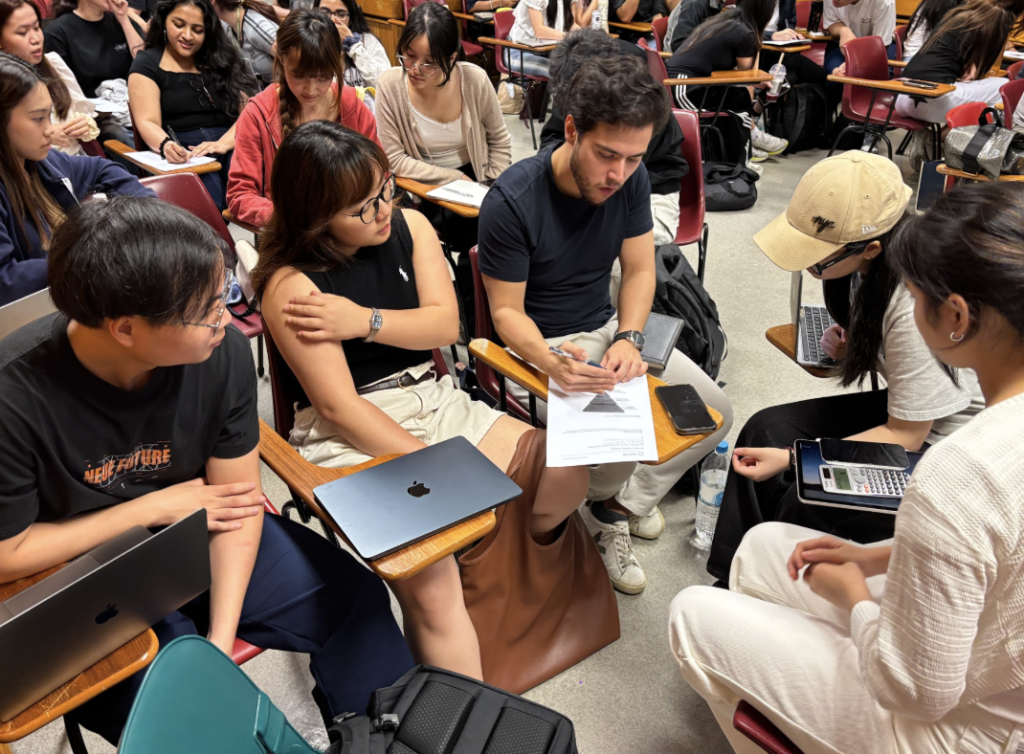
On 13 April, the 2026 Spring cohort of Impact Lab students gathered for the final seminar focusing on systems change. Building on previous sessions around impact-driven entrepreneurship and learning from failure, this seminar encouraged students to shift their perspective from solving individual problems to understanding the broader systems that shape them. The session opened with a thought-provoking question:
If you had access to a time machine, would you choose to live in another period of time?
While it seemed simple, this question prompted students to reflect on how societies evolve as well as how the systems we live in today, from education and technology to finance and capitalism, are shaped by historical decisions, constraints, and collective behaviors.
When Systems Are Tested
To understand how systems change, the seminar explored moments in history where existing structures were disrupted.
One example examined the 1967 Hong Kong riots, a period marked by violence and instability, where over 1,500 bombs were placed across the city, including in everyday objects. This moment highlighted how fragile systems can become under extreme pressure and how social, political, and economic forces are interconnected.
Another example examined how Singapore responded after separating from Malaysia, particularly in securing its water supply. Faced with uncertainty, Singapore developed independent systems to reduce reliance on external resources, showing how constraints can drive long-term structural innovation.
Students also reflected on Hong Kong’s economic growth since the 1960s, recognizing that while GDP has increased significantly, this has not always translated into social innovation or a willingness to take risks.
Systems Change in Practice
The discussion then shifted to one of the most well-known examples of systems change: the US Civil Rights Movement.
Students explored how systemic inequality was not only maintained through laws and policies but also through deeply embedded mental models: the beliefs that shape how people think and act. Through collective action and sustained dialogue, the Civil Rights Movement demonstrated that meaningful change requires not only policy reform but also a transformation in how society understands fairness, access, and equality.
Understanding Systems in Hong Kong
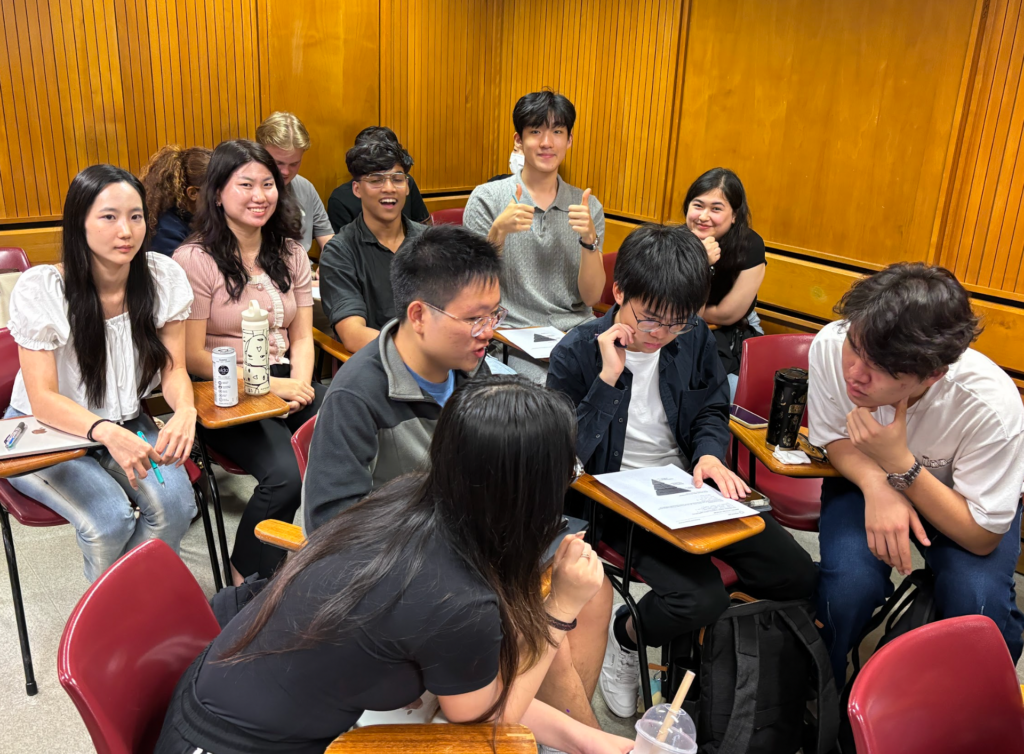
To apply these ideas, students examined a real-world issue closer to home: housing in Hong Kong.
The discussion revealed that systems are shaped not only by policies and structures, but also by mental models. One of the dominant beliefs identified was that property ownership is one of the most important and reliable forms of investment. This perception continues to drive high demand and influence market behaviour.
At the same time, several structural factors reinforce the system:
- Only around 25% of Hong Kong’s land is developed
- Approximately 45% of the population lives in government housing, with long-term targets aiming higher
- Government revenue is partially linked to real estate activity, creating complex and sometimes conflicting incentives
Students also discussed how housing supply is concentrated in specific areas, further intensifying demand and limiting accessibility. These interconnected elements highlighted how policies, incentives, and public perception interact, making systemic challenges difficult to address through isolated solutions.
Tackling Problems at the Root Causes
A key takeaway from the seminar was that systems operate on multiple levels. While policies and regulations shape outcomes, bigger change often requires addressing the beliefs and assumptions that sustain these systems in the first place. Students were encouraged to think about root causes, rather than symptoms, and to recognize that meaningful change often requires collective effort and long-term thinking.
In one discussion, the idea of collective action emerged as important, as without open dialogue and collaboration, systems tend to remain unchanged. However, when individuals and communities come together, they can challenge existing structures and drive transformation.
Empowering Youth to Envision and Drive Collective, Long-term Impact
As the last one of the Impact Lab series, the seminar on systems change marked an important conclusion to the students’ learning journey. Rather than focusing only on building solutions, students were encouraged to ask broader questions:
What systems shape the problems we are trying to solve?
And how can we begin to change them?
By understanding how systems function and where their constraints lie, students are better equipped to design solutions that are not only innovative but also sustainable and impactful.
Entrepreneurship does not happen in isolation. It exists within systems that influence access to resources, opportunities, and outcomes.
By exploring how these systems are formed, maintained, and transformed, the Impact Lab seminar empowered students to think beyond individual success and towards collective, long-term impact.
In many ways, systems change begins with a shift in mindset – from working within the system to questioning how it can be improved.
*This blog post was drafted by Sofia Becerra Liang, Communications and Marketing intern at the Foundation for Shared Impact (FSI) during the Spring 2026 semester of the Impact Lab Course.