On 20 October 2025, Impact Lab Course students reconvened for their second seminar of the semester, “Learning from Failure: Mastering Risk Management”, co-led by Lucia Loposova, Education Manager at FSI and Demonstrator of the Impact Lab Course, and David Bishop, Course Instructor and Co-founder and Director of FSI. The session invited participants to rethink failure — not as an endpoint, but as a powerful learning opportunity essential to entrepreneurial success.
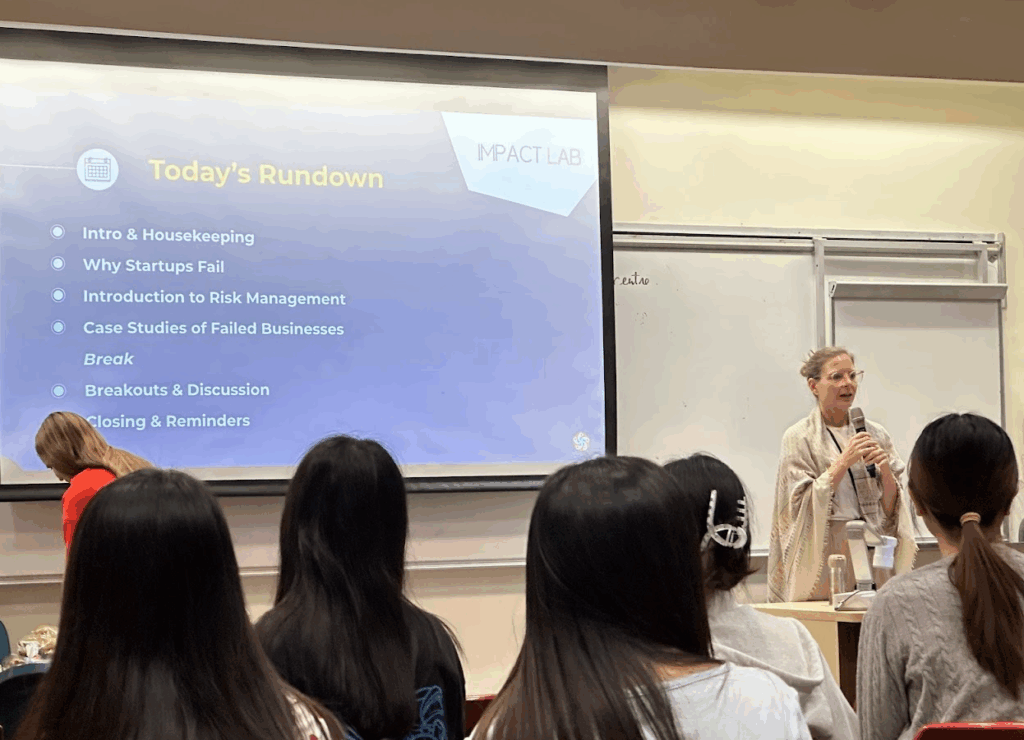
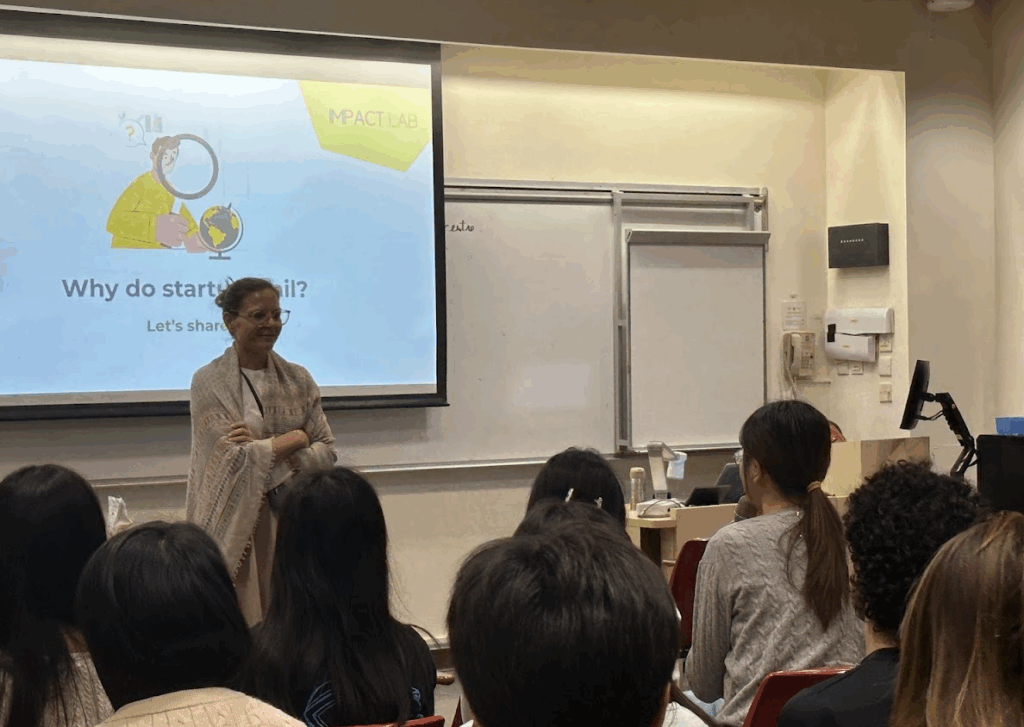
“There is a Chinese proverb that goes, ‘Hide the bad; glorify the good’”, said Lucia as she opened the seminar. “But in entrepreneurship, we must do the opposite. We need to look at our failures clearly — because that’s where the learning begins.”
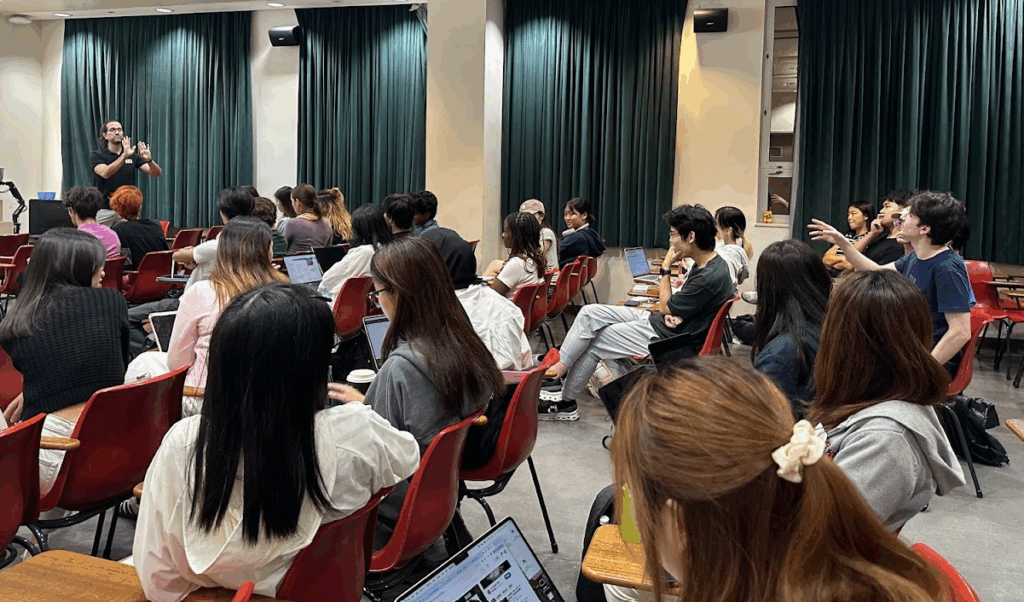
Her words set the tone for an honest and energetic exploration of why startups fail and what entrepreneurs can do to prevent it. The students, encouraged to participate actively, filled the room with raised hands and rapid exchanges.
Understanding Why Startups Fail
“Why do startups fail?” Lucia asked.
Hands shot up immediately — “Lack of funding”, “Poor market research”, “Regulations”, “Burnout”. Each answer sparked a deeper discussion. David added, “Interestingly, burnout and lack of passion rarely cause failure. It’s usually disharmony among the team or investors.” He emphasized that most investors don’t just invest in ideas — they invest in people. When values and working styles clash, even the best ideas can collapse.
David also shared other common causes of startup failures: mismatched products and markets, flawed business models, and regulatory challenges. Students were surprised to learn that pricing, location, and cost management — often seen as operational details — are also top contributors to failure. “No one mentioned it yet,” David said, “but being outcompeted is one of the most common reasons. Success depends on being in the right place at the right time, and being better than the rest.”
The lecture soon shifted from theory to a debate when Lucia asked: “Why do you think that so many Hong Kong startups fail?”
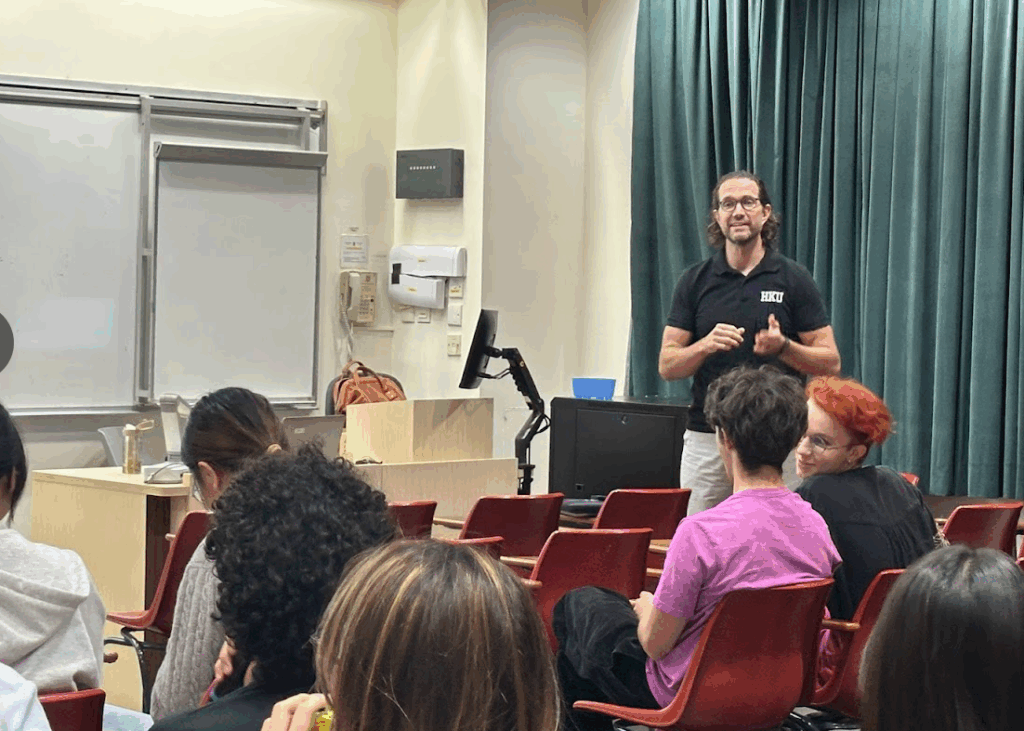
What followed was an intense, thought-provoking dialogue about Hong Kong’s entrepreneurial ecosystem. Students argued that the city’s high costs, limited investors, and conservative culture stifle innovation. David countered passionately, insisting that Hong Kong continues to attract some of the best global talent. “The problem,” he said, “isn’t people. It’s the system — a lack of connection between capital and creativity.”
He explained how Hong Kong’s dominance in finance creates both opportunity and constraint: “We have capital markets, but we don’t invest in startups. It’s crazy.” Students nodded as he described how the city’s real estate costs, slow banking processes, and rigid regulations create barriers to innovation. “Hong Kong is stuck in the middle of competing forces,” he said. “There’s no real competition in the banking space, and opening a business account can take months. That kills startup momentum.”
From Systemic Challenges to Personal Lessons
To illustrate how even promising ventures can fail, David shared a series of case studies from real companies, each with powerful lessons.
One of them was Evergreen, founded to make Hong Kong’s energy consumption more sustainable by switching to LED lighting. Despite clear long-term savings, the project failed because building owners, who were typically older and risk-averse, saw no short-term incentive to invest in energy-efficient lighting. “The people paying for the power aren’t the same people using it,” David explained. “So no one takes responsibility for change.”
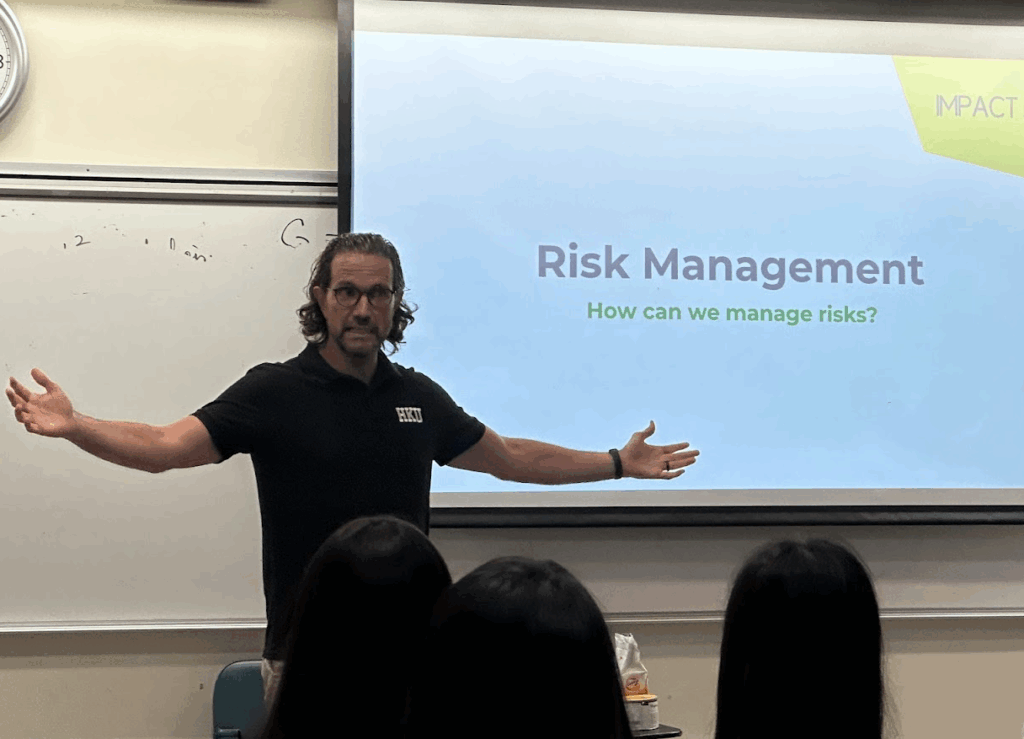
Learning from Failure
In the final part of the seminar, students broke into groups to discuss which company they believed failed most critically and why. Many chose Evergreen, noting how structural incentives, rather than technical flaws, prevented success. “Green energy is great in theory,” one student argued, “but if no one is responsible for the initial cost, nothing changes.”
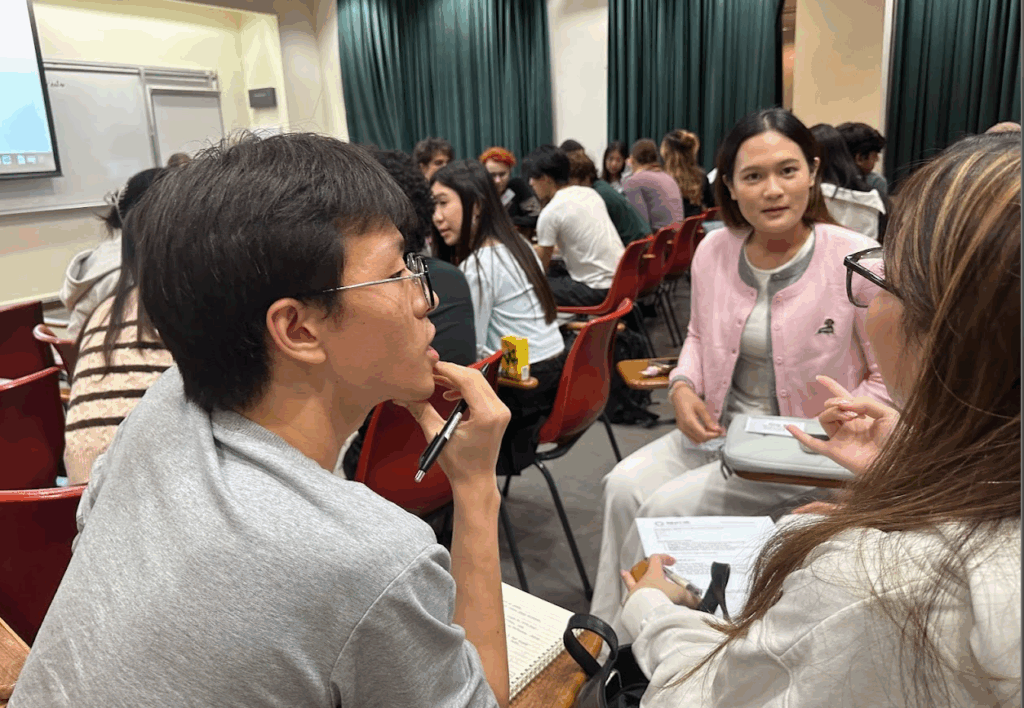
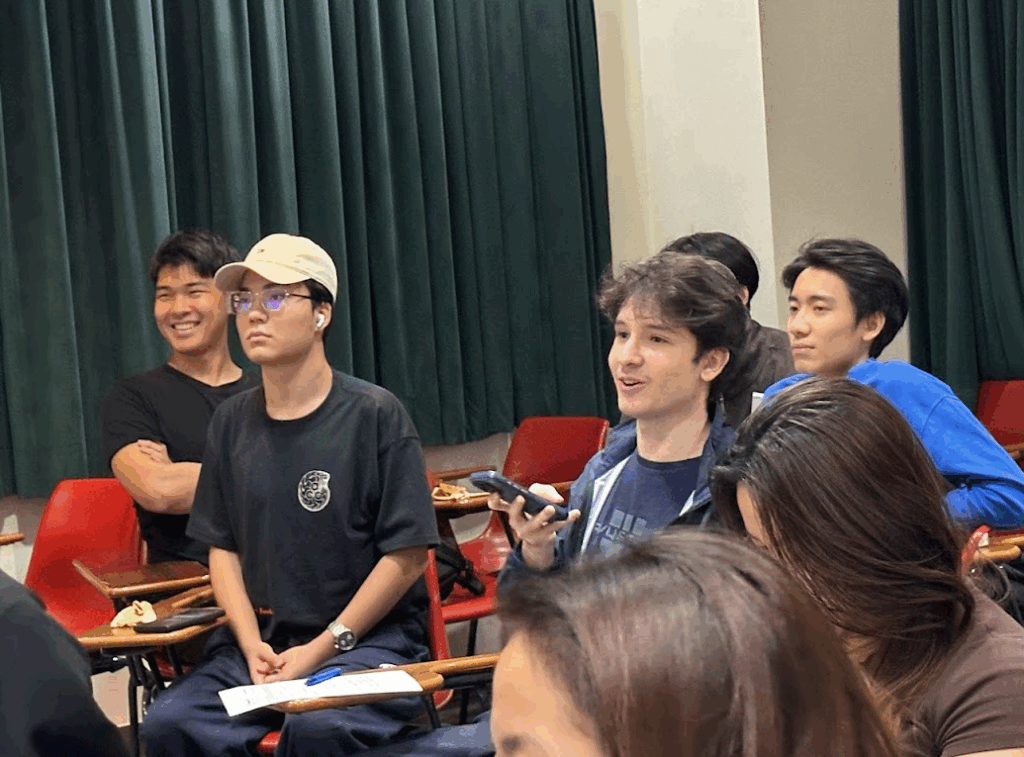
David walked around the room, listening and engaging with each group. “Remember: failure isn’t something to be ashamed of. It’s the seed of success. If we never fail, we never really learn.”
As the discussion closed, he added a personal reflection: “I’m trying to be the example of what you want to be in the future. I’ve failed more times than I can count — and that’s exactly why I can stand here today.”
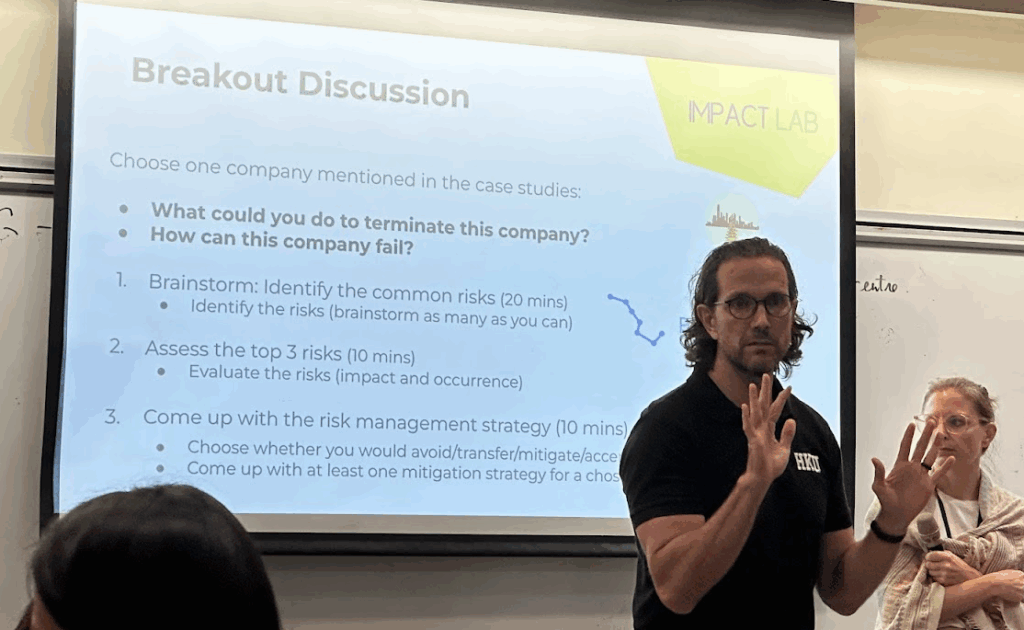
By the end of the two-hour seminar, students had gained more than an understanding of risk management. They had seen firsthand how resilience, ethics, and humility shape the entrepreneurial journey.
Through the Impact Lab Course, the Foundation for Shared Impact (FSI) continues to encourage young changemakers to see risk not as a threat, but as a pathway to create lasting impact. Learn more about our youth empowerment initiatives and get in touch with us at info@shared-impact.com if you would like to support our work in nurturing tomorrow’s impact leaders.
*This blog post was written by Toshiya Oh, Communications and Marketing intern at the Foundation for Shared Impact (FSI) during the Fall 2025 semester of the Impact Lab Course.