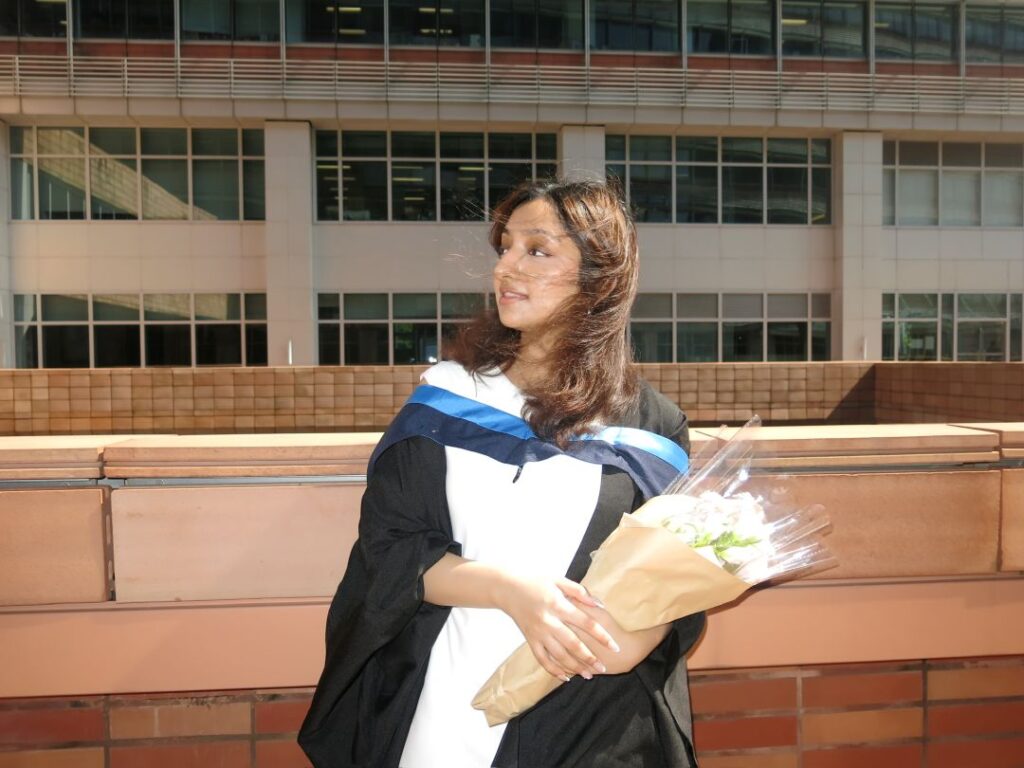
It was through a friend who took the award-winning Impact Lab course that Hira Qureshi first heard about Foundation for Shared Impact (FSI). The more she learned about FSI’s youth programs, the more alignment Hira would find in her values and FSI’s.
From exploring a youth program executed collaboratively between The University of Hong Kong (HKU) and FSI to providing critical support to that very program as a Youth Program Assistant, Hira recounts her initial connection with FSI, the gratification she experienced when witnessing the growth of youth program participants, and why she thinks FSI enables her to take on new challenges without fearing failure.
Read this interview with Hira to learn more about our Youth Program Assistant.
When and why did you join Foundation for Shared Impact (FSI)?
I joined in June 2026. Prior to FSI, I was studying at HKU and had heard about the Impact Lab course, but at the time I didn’t realize it was connected with FSI. It wasn’t until I started job hunting as a recent graduate that I came across an opening for FSI on LinkedIn. I researched FSI’s Community Business Support Program and immediately found it quite unique, due to its focus on helping under-resourced, ethnically diverse entrepreneurs in Hong Kong and assisting them in building their capacity. This sparked my initial interest in FSI.
At the same time, Jiye Park, a friend of mine who had previously joined the Impact Lab course and completed her internship at FSI, under the supervision of Jon (Pedersen; Co-founder and Director at FSI), kept encouraging me to apply as she was convinced I would fit right in with what FSI stood for.
What really drew me in, though, was exploring FSI’s youth programs, like the HKU Summer Institute, which was still in the planning stage at the time and is now something I’m actually a part of. My prior internship experience managing a similar program at HKU Academy for the Talented gave me a clear sense of how I could contribute meaningfully to youth empowerment. Moreover, spending my university years as a member of AIESEC, a youth-led organization focused on leadership development, solidified my desire to give back to society and educate youth in my career.
Although I initially applied for FSI’s opening for a Community Business Support Assistant, I eventually found alignment in another role, which is the Youth Program Assistant for the HKU Summer Institute and other youth empowerment initiatives at FSI.
What are your role and responsibilities?
As a Youth Program Assistant, my work is quite varied. I handle a bit of everything, from program support to event planning and marketing.
For the HKU Summer Institute, I have worked on creating logos, designing certificates, and building a Notion wiki website, which is similar to a student handbook that includes the program introduction, FAQs, practical tips, and some dining spots around the area. I also worked with Jon on a platform that allowed students to alert us to any issues and save their self-reflection during the program period. It opened my eyes to a whole new world in technology and was definitely something I didn’t expect coming into this role.
On the events side, for our HKU Summer Institute program, I helped plan the rundown for our High Table Dinner, which was the celebratory finale of the program and a highlight for a lot of the students. There was something special about seeing everyone come together and celebrate what they had achieved. It made all the behind-the-scenes work feel totally worth it and it reminded me why I am here in the first place.
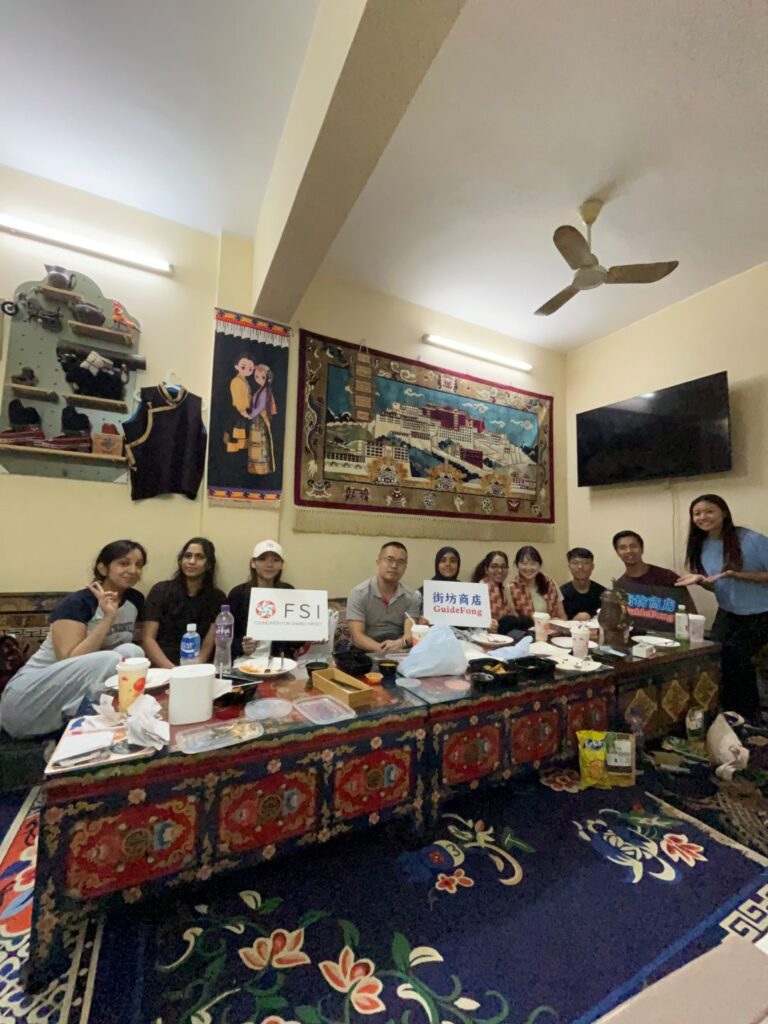
Beyond HKU Summer Institute, I was also involved in the “GuideFong: Stories of Resilience” initiative, which aims to empower Hong Kong’s youth to become storytellers and advocate for diverse communities across Hong Kong, by uncovering stories of resilience and community identity in the face of hardships. This initiative offered our students an opportunity to gain hands-on experience by interviewing local resilient leaders within the community and creating a multimedia campaign. I worked directly with the students by helping them develop interviewing skills and guiding them as they went on their outreaches to find resilient leaders within our community. It was rewarding to see them become more confident as they reached the completion of the initiative.
How would you describe FSI as an organization? Do FSI’s vision and mission align with your personal values? If yes, in what ways?
I would describe FSI as a “constantly evolving” organization. FSI is always adapting, whether that means refining our youth programs to better meet the needs of today’s students or rethinking our approach to community support based on real feedback. That willingness to change and improve is something I really admire.
Beyond that, FSI’s vision and mission resonate with me on a deeply personal level. FSI’s work is rooted in addressing real social challenges by fostering collaboration and ensuring that knowledge, information, and resources are shared openly rather than hoarded. We are driven by a vision of a future where everyone has the opportunity to succeed. That shared impact philosophy aligns perfectly with one of my core values: kindness. To me, kindness means showing up for others, offering support without expecting anything in return, and believing that someone else’s success does not diminish our own. Life should not be a zero-sum game, and FSI embodies that belief in everything we do.
Were there any memorable moments (e.g., in the work you do, the time spent with your colleagues, learning, inspiration etc.)?
One memory that really stuck with me was when a student came up to me after a session during our HKU Summer Institute Program and genuinely thanked me for the work I had put in. They were so grateful for the program, and at that moment I felt like all the effort I had put into the program was worth it.
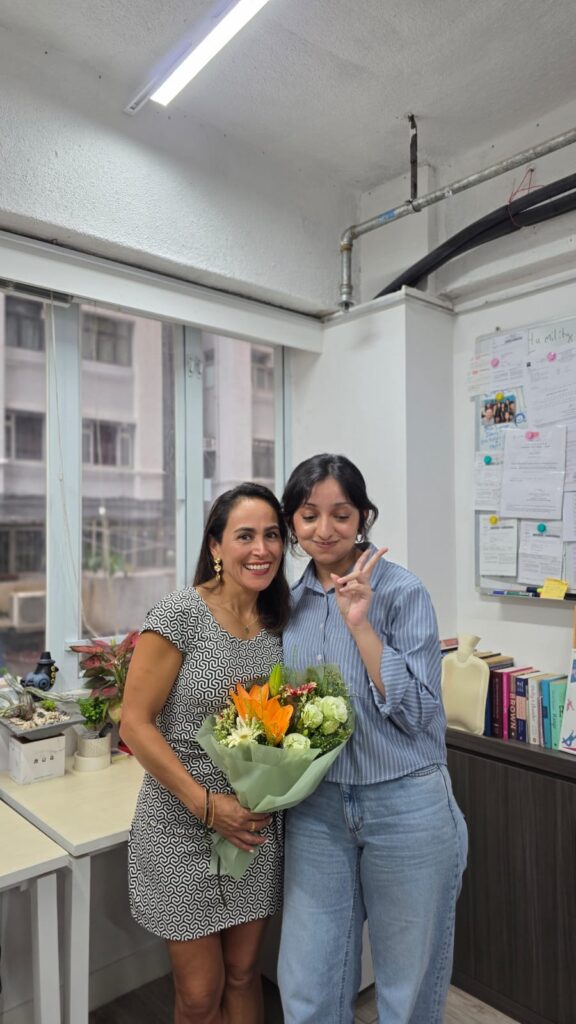
On top of that, I have truly enjoyed working with everyone, especially my direct supervisor, Veleda (Tam; Youth Empowerment Program Manager), who has been incredibly supportive. The rest of the team has been equally encouraging, and I genuinely feel like I have a great support system here.
How do you find your work and the company culture at FSI so far?
The experience has been engaging and deeply meaningful. I find myself constantly learning something new, and what I appreciate most is that everyone is so supportive and generous with their encouragement. This kind of environment makes me feel safe enough to take on new challenges without being afraid of failing. It feels fulfilling in a way that’s hard to put into words, and I genuinely look forward to what each day brings.
Tell us a bit more about yourself – your hobbies, self-care routine, passion etc.?
In my free time, I prefer being outdoors and doing things that give me that little rush, things like rollercoasters and horror movies or anything that can give me an immediate dopamine boost. I also love traveling with my friends.
Fun fact: I am very easy to read, so if I like or dislike something, it is pretty much written all over my face.
In your opinion, what is needed to build a more sustainable, equitable, and resilient society? Alternatively, what is the kind of change you want to see in Hong Kong? How does your and FSI’s work contribute to that change?
I think the biggest change that needs to happen is in people’s mindsets. We need to stop seeing others as strangers we don’t care about and start seeing everyone as part of our own community. I also think we are too harsh when others make mistakes, yet somehow far more forgiving when we make the same ones. I want us to treat everyone like family so we can share knowledge freely and create a society where people aren’t afraid to fail.
As a Youth Program Assistant, I work directly with students, which gives me the opportunity to help instill that sense of community bonding early on. Through our work, I hope we are not just teaching skills but also showing young people that it’s okay to fail and that we are all in this together.
What is the best thing about being Hira Qureshi right now?
It’s the fact that I am unapologetically myself. For the longest time, I kept trying to change for other people so that I could be what they expected from me. But now I am actually content with being me and just living my life to the fullest.